

Written by: Crocus Head Gardener Ashley Edwards
Orchids belong to the second largest plant family in the world with over 30,000 species worldwide and are found growing across the globe, including the UK. The orchids we use as houseplants are from tropical and temperate parts of the globe and were popularised during the Victorian era. In fact they were so popular that wild species were decimated by orchid hunters. Orchid poaching and habitat loss continues to be a threat to many rare species, but with advances in technology and propagation, many orchid species are now readily available for the houseplant enthusiast.
Orchids are often bought as gifts, and I’m often asked how to care for them. Despite their delicate appearance, most orchids are not fussy and you can be successful in growing them and getting them to reflower with a few simple steps.
The most common orchids you’ll find available are:


Phalaenopsis
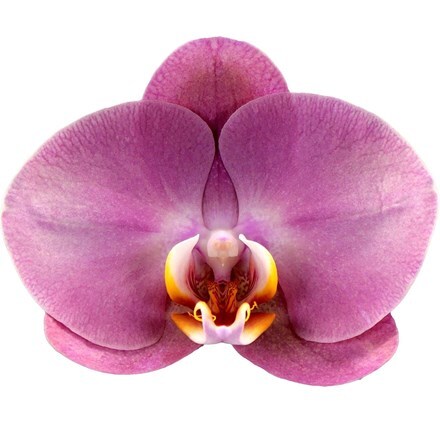
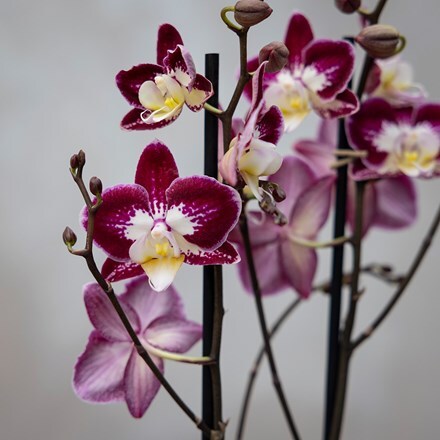
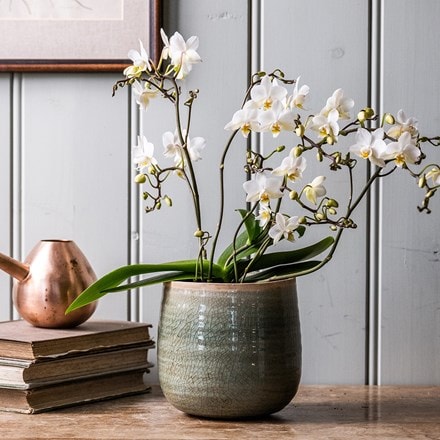
Also known as moth orchids, these are the most popular orchids to buy and have exotic, long lasting flowers, which can appear at any time of year. They like year round temperatures above 16C, and a bright position, but not direct summer sun. They dislike fluctuating temperatures, so keep away from cold draughts.
In the wild they grow as epiphytes, clinging to trees with their roots and absorbing nutrients and moisture from the air around them. Because of this they aren’t cultivated in soil, but loose bark. They hate their roots sitting in water, so make sure to let water drain from the pot and tip out saucers after watering. You only need to water once a week in summer and reduce the amount in winter.Phalaenopsis roots can actually photosynthesise and turn a silvery colour when dry or fleshy green when hydrated. You can use specialised orchid feed to encourage flowering in the summer months, make sure to flush the pot with water every forth feed to rinse out any harmful salts that can build up.
When the flowers have finished you can cut back the stems to two nodes (visible bumps on the stem), they will then produce next year's flower spikes from these points. Baby plants sometimes appear on old flowering stems and these are known as keikis. They will develop their own roots after which time you can cut them off and grow them in orchid compost. Orchids tend to do better when their roots are slightly constricted, so there’s no need to increase the size of the pot unless the plant has become completely root bound. Roots sometimes grow out of the top of the pot into the air, this is fine and how they would grow in the wild.

Dendrobium
Sometimes called bamboo orchids due to their fleshy pseudobulbs which look like stems, these orchids come in all sorts of colours and will tolerate slightly cooler temperatures than Phalaenopsis. They come in a huge range of sizes and hues, and the flowers are often dramatic with many appearing at once.
Car is similar to the moth orchid, they like a bright sunny position, not full summer sun, and don't like sitting in wet compost. They will flower from February-June, providing a long lasting display of colour with the added bonus of scent. New shoots appear over time and old ones fade, these can be cut back to the base of the plant. Keep the plant cooler and drier through autumn and winter and this should encourage flowers the following year. Pot on once stems begin to crowd each other in the pot and use specialised orchid compost.


Cymbidium
These are bigger orchids which will create a statement piece in your house. The leaves are straplike and the flower spikes appear from the base of the plant, creating huge arching displays. The flowers are often speckled and can have a light fragrance, appearing between autumn and spring. Miniature cymbidiums are also available which are excellent for smaller spaces.
The care for these orchids is similar to Phaleanopsis and Dendrobiums, except Cymbidiums like to be repotted every two years or when the plant outgrows its pot. Always use orchid compost as they like a free draining medium and don’t use a pot much larger than the one it's in, but just enough for another two years growth.
These orchids will enjoy cooler temperatures and prefer to be kept between 14-24C in Summer and 10-15C in winter. Most rooms with central heating will be too warm for them in winter, so move to an unheated conservatory or bright windowsill if possible. The plants need a change in day and night temperature to stimulate flowering, so place your plants outside in mid-late summer in a sheltered position away from direct sunlight. Remember to bring them in before temperatures drop in autumn. Feeding your plants with a high-potash orchid feed in summer will also encourage repeat blooms. Although slightly trickier to look after, Cymbidium are definitely worth the extra steps.