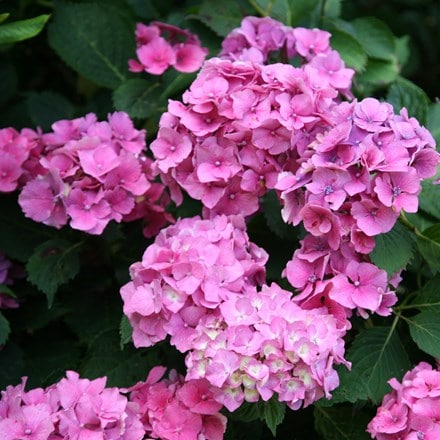
Plant of the Month – Hydrangea

Hydrangeas are among the most recognisable shrubs in summer gardens, valued for their large, long-lasting flowerheads and ability to brighten borders when many other plants are beginning to fade.

With around 75 species found naturally across Japan, China, Korea, and the Americas, hydrangeas offer far more diversity than many gardeners realise.

From elegant lacecaps and towering panicles to classic mopheads that can change colour according to soil conditions, there is a hydrangea suited to almost every corner of the garden, as well as providing impressive and long-lasting cut flower displays.

Their flowers often persist well into autumn before fading to attractive seedheads in shades of tan, silver, and burgundy that continue to provide interest through winter. Whether planted as a focal point in a mixed border or used to brighten a shady corner, hydrangeas earn their place in the garden with months of reliable colour and structure.
Discover heavenly hydrangeas

Shop now

More than just pink and blue mopheads

Think ‘old-school’ hydrangeas and you will invariably settle on large pink or blue mophead cultivated forms. Whilst these remain popular, modern breeding has introduced an exciting range of colours, foliage, and flower forms.

For dramatic contrast, Hydrangea macrophylla 'Zebra' combines striking black stems and crisp white blooms, making it a popular choice amongst garden designers. For something more contemporary, Hydrangea macrophylla 'Blushing Bride' combines crisp white and pink-flushed blooms, flowering on both old and new season wood) with healthy green foliage for a sophisticated look.

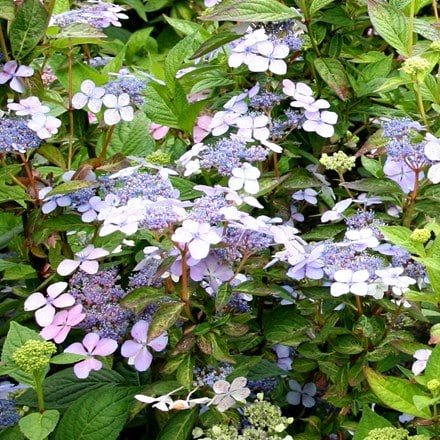
Hydrangeas also vary enormously in flower shape. Mopheads produce large rounded flowerheads, whilst lacecaps have a flatter form made up of tiny fertile flowers surrounded by larger decorative bracts. These fertile flowers provide a valuable food source for pollinating insects, making lacecaps, such as the RHS award-winning Hydrangea macrophylla ‘Lanarth White’, particularly wildlife-friendly.

A hydrangea for every garden?

One of the greatest strengths of hydrangeas is their versatility. With the right selection, there is a plant suited to almost any position.

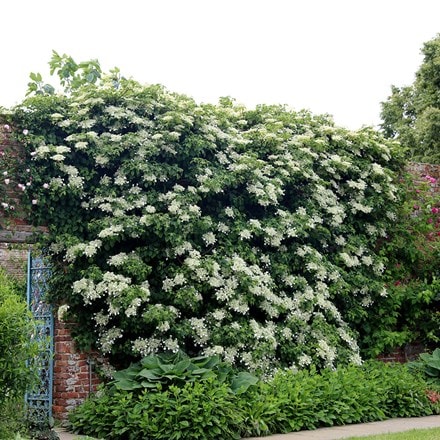
For shaded areas, lacecap hydrangeas and Hydrangea serrata are excellent choices. Native to the mountains of Japan, Hydrangea serrata produces delicate flowers and often develops attractive red and bronze tints in autumn. For difficult walls and fences, the climbing hydrangea, Hydrangea anomala subsp. petiolaris, thrives in shade where many climbers struggle

Hydrangea quercifolia, the oak-leaved hydrangea, is another excellent choice for dappled shade. Its bold foliage provides texture throughout the growing season before turning rich shades of red, bronze and purple in autumn.

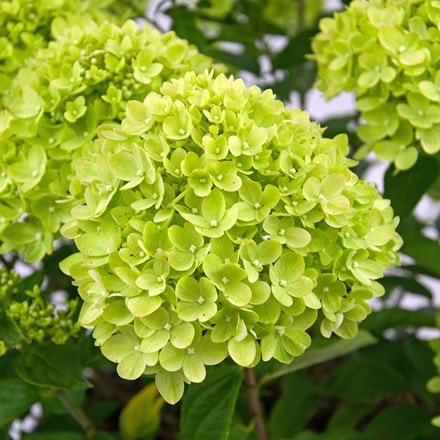
For sunnier borders, Hydrangea paniculata cultivated varieties are among the most reliable. Their upright, cone-shaped flowerheads bring height and structure from August onwards. Cultivars such as 'Limelight', 'Little Lime', and 'Silver Dollar' provide impressive late-season displays and tend to cope better with warmer conditions than traditional mopheads.

Hydrangea paniculata ‘Vanille Fraise’

Hydrangeas for a changing climate

As summers become warmer and periods of drought more common, choosing the right location for hydrangeas is increasingly important.

Although hydrangeas are often associated with moisture, many can thrive, once established, in modern gardens if given the right conditions. The key is keeping the root system cool and reducing moisture loss. A position with morning sun and light afternoon shade is ideal, particularly for H. macrophylla cultivars.

Planting beneath a light tree canopy can also help protect flowers and foliage from intense midday sun whilst still allowing sufficient light for bud development and flowering. Generous mulching with compost or well-rotted organic matter helps retain moisture, improves soil structure and buffers plants against periods of dry weather.

Hydrangea paniculata and Hydrangea quercifolia are often more resilient choices for exposed or warmer sites, making them valuable additions as gardens adapt to changing conditions.

Fill your garden with summer colour

Sun loving hydrangeas

Shop now

Planting and caring for hydrangeas

Hydrangeas perform best in fertile, moisture-retentive but well-drained soil. Compact, pot-bred cultivars such as 'Little Pink’' and 'Skyfall' do best with the same amount of dappled shade but do best with John Innes no.3, loam-based or enriched general purpose over a good drainage layer in large, thick-walled containers which will help to insulate roots from large temperature swings.

Whilst established plants are relatively low maintenance, they benefit from deep watering during prolonged dry spells rather than frequent light watering. Applying a 5cm (2in) mulch each spring helps conserve moisture and supports healthy growth.

The colour of a hydrangea flower can be a conversation between the plant and the soil. This is most noticeable in Hydrangea macrophylla cultivars, where acidic soils encourage blue and purple tones, whilst neutral or alkaline soils produce pink flowers. White-flowered varieties remain unaffected by soil pH. At Crocus, we use a slightly acidic to neutral compost mix which tends to skew delivered plants towards a light mauve initially.

Hydrangea colourants, and additions of lime or ericaceous compost (or ericaceous feeds) are available to help affect the pH marginally, but we advise choosing the colour of hydrangea that will best suit the conditions. Pot grown plants are usually more stable in colour if additional pH measures are carried out.

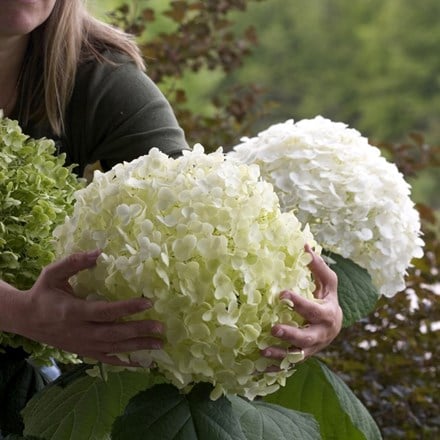
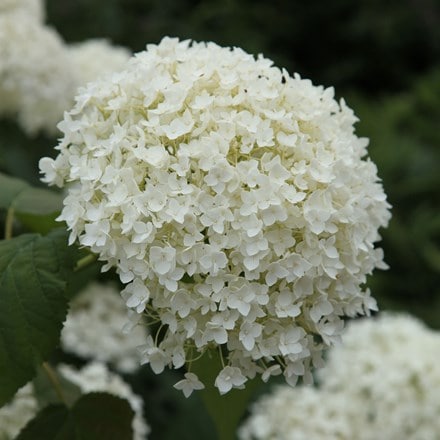
Hydrangea arborescens ‘Sweet Annabelle’

Pruning without fear

Most Hydrangea macrophylla and Hydrangea serrata cultivars flower on old wood (stems produced the previous year). These should be lightly pruned in spring by removing faded flowerheads and cutting back to a healthy pair of buds. Avoid hard pruning, as this can remove the developing flower buds.

Hydrangea paniculata and Hydrangea arborescens (including 'Annabelle') flower on new growth and can be pruned in late winter or early spring. Cut stems back to around 30-60cm (1-2ft) above ground level, although leaving them slightly taller can help support the large flowerheads and reduce flopping. Younger plants may benefit from additional support until they develop a stronger framework.

Secateurs & snips

Shop now

Make a statement

Hydrangeas offer far more than simply summer flowers. They provide structure, seasonal interest, autumn colour and, in the case of lacecaps, valuable resources for pollinators. Their adaptability means there is a plant suited to everything from sunny borders and woodland gardens to patios and containers.

Whether grown for their flowers, foliage, or long season of interest, hydrangeas remain one of the most rewarding shrubs for modern gardens, providing colour and character from summer well into winter.

How to use shrubs & grasses in the garden

How to use shrubs & grasses in the garden

Read more

All shrubs

All shrubs

Shop now