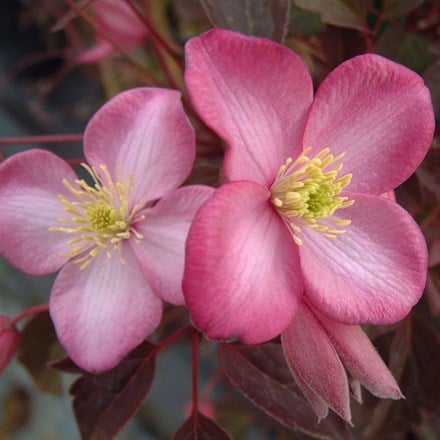
Plant of the month: Clematis

Written by: Justin Turner

Plant of the month: Clematis

Clematis are one of those plants that quietly do it all. They climb without taking over, flower for months on end, and squeeze into the smallest gardens. From dainty spring blooms to big, show-stopping summer flowers, there’s a clematis for almost every space – and they’re far more beginner-friendly than their reputation suggests.

Whether you’re growing up a fence, softening a wall, or adding height to a large patio pot, clematis reward a little plant care and know-how with years of colour. These members of the buttercup family are also brilliant for pollinators, offering nectar when bees and other insects really need it.

View all clematis plants

Why gardeners love clematis

Clematis earn their place in the garden because they’re versatile, long-lived and easy to slot almost anywhere. You can grow them in borders, suitably large containers, or trained up trellises, arches and obelisks. Many cultivated varieties and species are compact enough for urban gardens, while others are perfect for covering large structures.

With flowers in almost every colour – whites, pinks, purples, reds, blues and even zingy yellows – plus a wide range of shapes and sizes, clematis are also great companion plants for other climbers such as climbing and rambling roses, as they flower from late winter right through to autumn. Pick the right succession of clematis from the different groups, and you can have blooms for most of the year.

Climbers

Climbers

Shop now

Trellises, arches & obelisks

Trellises, arches & obelisks

Shop now

The main types of clematis (and why it matters)

Clematis are grouped by when they flower, which also tells you how and when to prune. Don't worry, once you know the basics, it's straightforward.

Group 1 - Early flowering clematis

Flowering: January to April, on stems made the previous year.

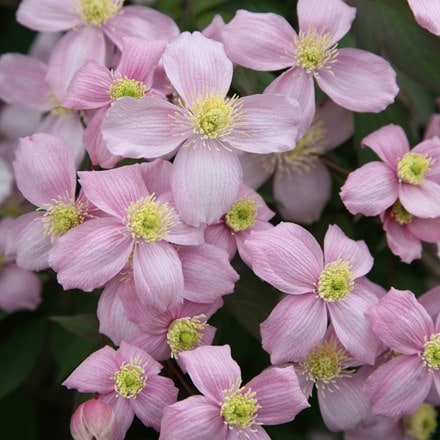
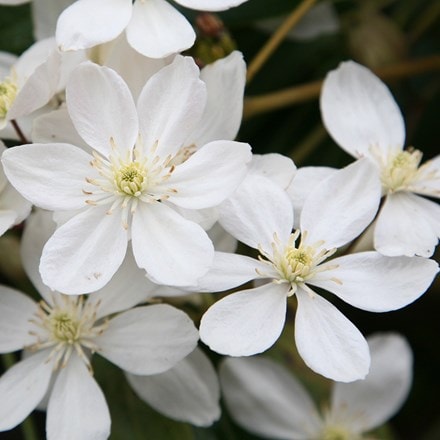
These are often evergreen or semi-evergreen and are great for early colour when little else is flowering. Popular choices include Clematis cirrhosa ‘Freckles’, Clematis montana ‘Pink Perfection’, Clematis armandi and Clematis macropetala.

Pruning: Minimal. If it flowers before June, don’t prune in winter. Simply tidy after flowering, removing dead or damaged stems to keep plants neat and healthy.

Wildlife bonus: Early flowers are a valuable nectar source for emerging pollinators.

Group 2 - Large-flowering clematis

Flowering: May to June, often with a second flush later in summer or early autumn.

These are the classic big-flowered clematis, with bold, eye-catching ‘dinner plate’-sized blooms. Cultivated varieties like ‘Niobe’, ‘Westerplatte’ and ‘Bees Jubilee’ are popular choices.

Pruning: Light pruning. In early spring, remove dead or weak stems and cut back to the first pair of plump, healthy buds. After the first flush of flowers, trim spent blooms to encourage a second show.

Wildlife bonus: Single-flowered forms are best for pollinators, as the centres are easier to access.

Group 3 - Late-flowering clematis

Flowering: Summer to early autumn, on new growth.

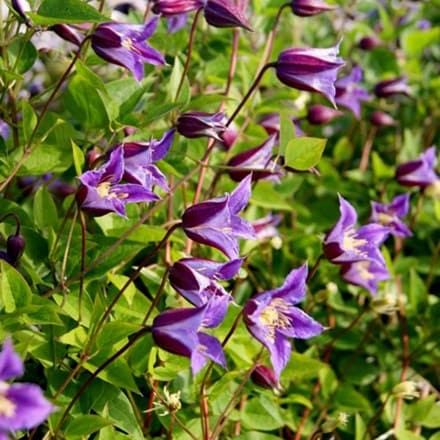
This group includes tough, reliable favourites like Clematis viticella, Clematis jackmanii, Clematis tangutica and Clematis texensis. They’re vigorous, floriferous and very forgiving – ideal for beginners.

Pruning: Hard prune. In late winter or early spring, cut all stems back to 15-20cm (6-8in) above soil level.

Wildlife bonus: These flower during peak pollinator season, making them excellent for bees and hoverflies.

Herbaceous clematis

These clematis behave more like perennials than climbers. They die back completely in winter and reappear in spring, often forming loose, billowing plants rather than upright-growing climbers.

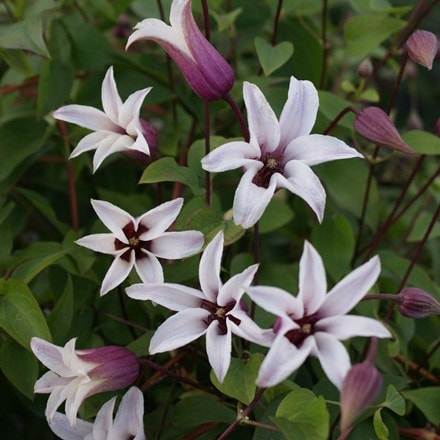
Good examples include Clematis integrifolia, Clematis recta and Clematis heracleifolia, which all form low, spreading plants with delicate, cup-shaped flowers. Some are even highly scented!

Pruning: Cut all stems back to ground level in late winter or early spring.

Wildlife bonus: Herbaceous clematis are great for pollinators because their open, accessible flowers provide nectar for bees and hoverflies throughout the summer.

Clematis

Best clematis for beginners

If you’re new to clematis, start with plants that are reliable and more forgiving:

- Clematis viticella types - tough, disease-resistant and flower for weeks.

- Clematis montana - fast-growing and great for covering fences.

- Clematis tangutica - cheerful yellow flowers and decorative seedheads.

- Clematis Blue River (Herbaceous clematis) - simple pruning and easy care.

These cope well with a range of conditions and don’t mind the odd gardening mistake.

Where to grow clematis

Most clematis enjoy sun on their stems and cool roots – often summed up as ‘head in the sun, feet in the shade’. A sunny or lightly shaded position works well for most types. Plants in full sun can have their roots shaded by clematis root-protectors, a deep layer of mulch, or by nearby plantings that will shade the clematis roots during the hottest parts of the day.

As with all climbers – to avoid dry conditions, and to ensure good soil contact around the root ball, we advise planting climbers at least 30cm (12in), and preferably 45-60cm (18-24in) away from the base of a wall or fence. An even larger distance should be maintained when planting climbers beside an existing tree or shrub.

They’re happy growing up walls, fences, pergolas, trellis and arches, or even through shrubs. Compact clematis also perform well in large pots, as long as containers are deep and well-watered. We recommend a loam-based compost (or general-purpose compost enriched with John Innes) for longevity.

Planting and getting established

Best time to plant: Traditionally, spring or autumn, when soil is workable, though fully hardy plants can be planted out at any time the ground is not waterlogged, frozen, or subject to drought conditions.

Soil: Free-draining but moisture-retentive, enriched with compost.

Planting depth: Plant slightly deeper than the nursery pot. This helps protect the crown from damage, and any surface roots, and encourages extra shoots to form below soil level, resulting in a fuller, stronger plant. It also reduces the risk of clematis wilt by insulating the base of the stems and allows the plant to recover more easily if top growth is lost.

Watering: Water well after planting and keep evenly moist during the first year.

Mulching: Mulch around the base to keep roots cool. This is most important.

Support: Tie in young shoots gently as they grow.

Growing clematis for wildlife

Choose single-flowered clematis where possible, as they provide easier access to nectar and pollen. Mix early, mid and late-flowering types to support pollinators from winter through to autumn. Allow seed heads to remain where possible – they add winter interest and shelter.

In the UK, clematis flowers are regularly visited by bees such as honeybees, buff-tailed bumblebees and solitary bees, as well as hoverflies. Open- and single-flowered species are also used by butterflies like small whites and peacocks, and by day-flying moths for nectar.

Final thoughts: Growing clematis with confidence

Clematis might appear tricky to grow, but they’re wonderfully practical and resilient plants. If this seems overwhelming or you're spoilt for choice, a plant awarded the RHS Award of Garden Merit is always a good option.

Start with an easy, cultivated variety, follow the planting and pruning basics, and don’t overthink it. With the right spot and a little care, clematis will quietly transform your garden with months of colour – and bring plenty of wildlife along for the ride.

View all clematis plants