Choice plants in April
We have had a fantastic start to spring and now the clocks have gone forwards there is no stopping me. I imagine as soon as the temperatures are raised another notch or too there will be no stopping the plants too. I will of course be giving them a helping hand. The compost bins are all getting emptied out onto the beds and the contents dug in, and then the beds will be dressed with some general purpose fertiliser. With all the tender new shoots coming through I will be keeping an eye out for slugs and snails and trying to keep one step ahead of the weeds. The lawn too will get its first application of feed and weed, and a clip at a high setting, which will help whip it into shape. It’s going to be a busy month, but an exciting one.
Top six choices
Cracking Combination of the Month
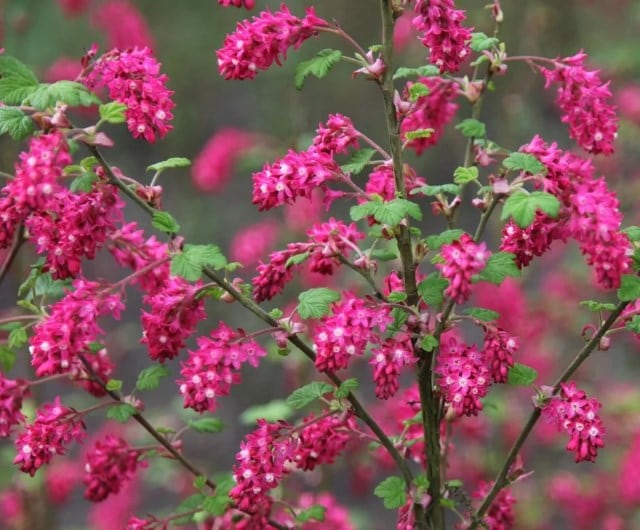
I love using rich purples and raspberry shades together, which is why I have selected these two plants for this months combination. The ribes is a reasonably large shrub which will dominate the pairing. Finding something to grow happily beneath large shrubs is sometimes difficult as they tend to cast a fair amount of shade, but the vinca will thrive here provided it isn’t allowed to get too dry. The vinca will start to bloom at the same time as the ribes, so they will both put on a dazzling display in mid spring, but then the vinca will go on flowering long after the ribes has finished - sometimes well into autumn.
What it’s useful for:
Creating a big splash in the spring garden, these deciduous shrubs are easy to grow and generally undemanding as long as there is a reasonable amount of sun and the soil is not too heavy and wet. They will be one of the first shrubs into flower each year, so are very good at kicking off the colour in the border. Alternatively plant them at 45cm intervals and create an informal hedge - they look wonderful, but make sure any pruning is tackled immediately after flowering or you may miss out on the following years flowers.
Why I like it:
The rich, raspberry-red colour of the blooms, which look superb set against the backdrop of the newly-emerged, fresh green foliage, make this my favourite flowering currant. They appear in generous numbers, and the pendulous clusters create a very pretty effect as they look as though they are dripping from the branches. The upright habit of this shrub makes it ideal for squeezing in between others in the border, but if given a little more room they will form a more rounded shape. Sometimes they will produce clusters of near black berries in summer. These are inedible, but will still add interest into the autumn.
What it’s useful for:
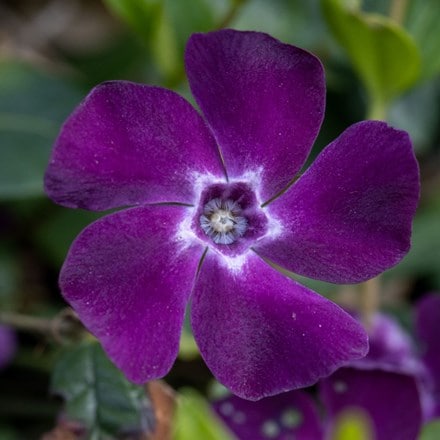
The top designers cant get enough of this plant, which may come as a surprise to some as it is only a humble periwinkle. It is very shade-tolerant and also has a wonderfully compact habit. The rich plum-purple flowers help to spice things up in a dark corner and it has an incredibly long flowering period. Under-plant it with paler coloured crocus to prolong the season of interest and mix in some fresh-leaved ferns for textural diversity. Perfection.
Why I like it:
Vincas have long been associated with love, which I find charming. They were said to be owned by Venus and they were often planted outside the homes of newlyweds in the belief that they would ensure a long and happy marriage. The blue flowered forms were often worn by the bride at weddings as their 'something blue' and it has been reported that eating their leaves will induce lots of warm and fuzzing feelings. Apart from all that, I find this low-growing woodland perennial more decorative than the common blue forms, but equally tough - if not more so.
What it’s useful for:
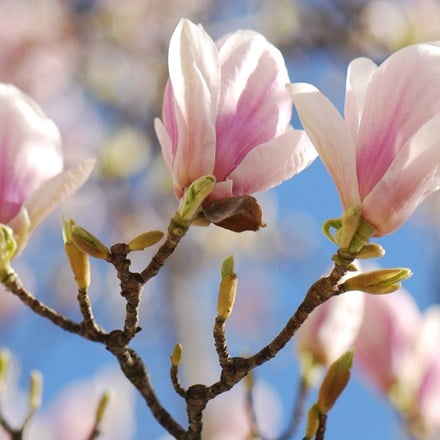
An adaptable multi-stemmed shrub, that with a little formative pruning, will become more tree-like if its lower branches are removed. With a maximum height of around 6m, this beautiful plant should definitely be up near the top of the shortlist when trying to choose what tree to use in a small garden. In full flower, it makes a jaw-dropping display, and it will create an elegant centre-point to the spring garden.
Why I like it:
It is difficult to pick out just one of the Magnolias as being particularly noteworthy, as most of them are gorgeous. My fickle head has been turned recently by the newly introduced Magnolia Black Tulip ('Jurmag1') (PBR), but ultimately I have to remain faithful to my old favourite. It isn't just me either. It is probably one of the most easily recognised and best loved of all the flowering trees. Its big, goblet-shaped flowers come in shades of pink, purple and white and have an intoxicating scent. As the flowers fade, the petals fall to the ground and create a carpet around the base of the plant, which is almost as pretty as the display above.
What it’s useful for:
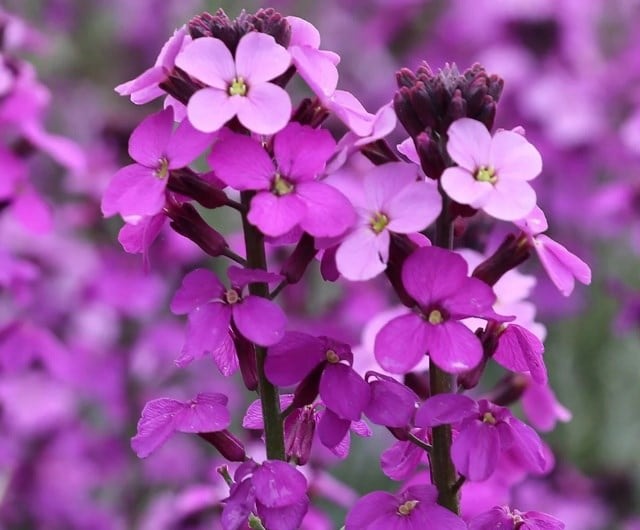
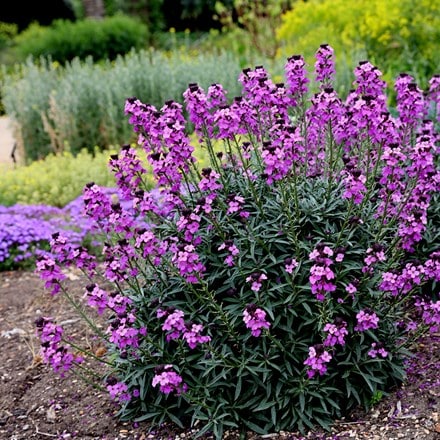
This is one of the best perennial wallflowers. It will keep on producing flowers from late winter to midsummer, and then, incredibly, if you remove the spent flower stems, it may produce a second flush in autumn. They do well in pots so can be used as a longer-lasting alternative to summer bedding, and can be cut and used in fresh or dried flower arrangements.
Why I like it:
This is a brilliant little plant and I never miss an opportunity to sing its praises. That is because I think they are true stalwarts in the garden and offer great value for money. They may be short-lived (they usually need replacing every two or three years), but their ability to flower for months on end make them one of my all-time favourites. Plant them in a sunny, well-drained spot (ideally next to something with silver or bluish-grey foliage) and I suspect you will be won over too.
What it’s useful for:
A hefty and vigorous twining climber that will give you cover in record time. If unsupported it can be left to trail along the ground where it will help keep the weeds at bay - although it looks its best when the sun can be seen filtering through the leaves. The soft, newly emerging shoots can be added to salads, or left to mature, peeled of their bark, and used to make baskets. The leaves can be used to make a tea, and it is used in Chinese medicine to treat a number of ailments including swelling and pain relief.
Why I like it:
The luxuriantly coloured flowers, which have a, spicy, vanilla-scent (it gets even stronger at night), and the handsome, almost evergreen foliage are the main reasons. It may also produce these weird and wonderful, sausage-like fruits if there is another Akebia nearby. These are so strange and unexpected they will become a real talking point amongst all your gardening buddies. I’m not sure I could be persuaded to try them, but these bizarre seedpods have a whitish pulp inside, which is said to have a sweet, but mild flavour when eaten.
What it’s useful for:
Thriving in acid soils in full sun or light shade, this colourful evergreen shrub has been around for some time now, but it is a timeless classic. It is ideally suited to a woodland setting or shrub border, and is dramatic enough to make a spectacle of itself from quite a distance - although you may want to plant it somewhere a little closer to the house so you can admire its striking seasonal display.
Why I like it:
It is a real head-turner in spring. When the new foliage emerges it is a brilliant scarlet, making it look as though the whole plant has been set on fire. This new growth gradually turns to pink and then a creamy white before settling down to its permanent shade of green. At around the same time, clusters of little white flowers appear, crowding the ends of the branches. Upright at first, they become more pendulous with age, eventually becoming gently arching sprays covered with masses of miniature bells. Very pretty.