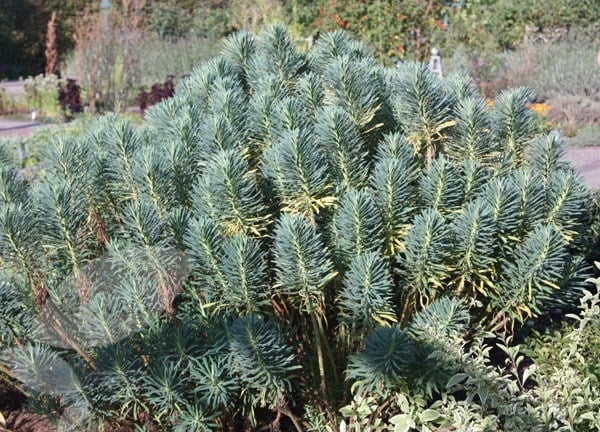
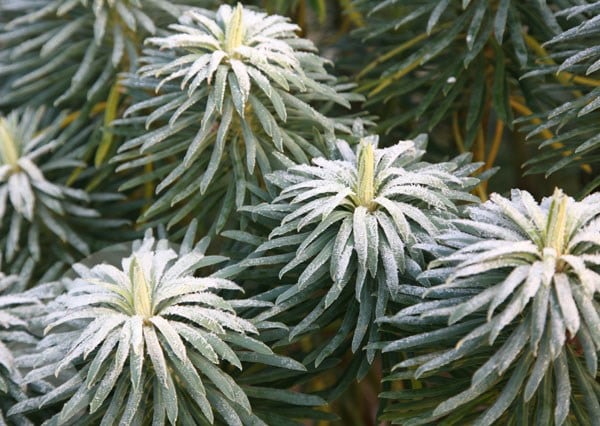
Euphorbia characias subsp. wulfenii
spurge
- Position: full sun
- Soil: light, well-drained garden soil
- Rate of growth: fast growing
- Flowering period: March to May
- Hardiness: fully hardy
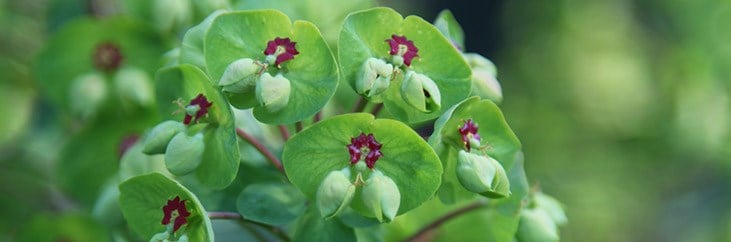
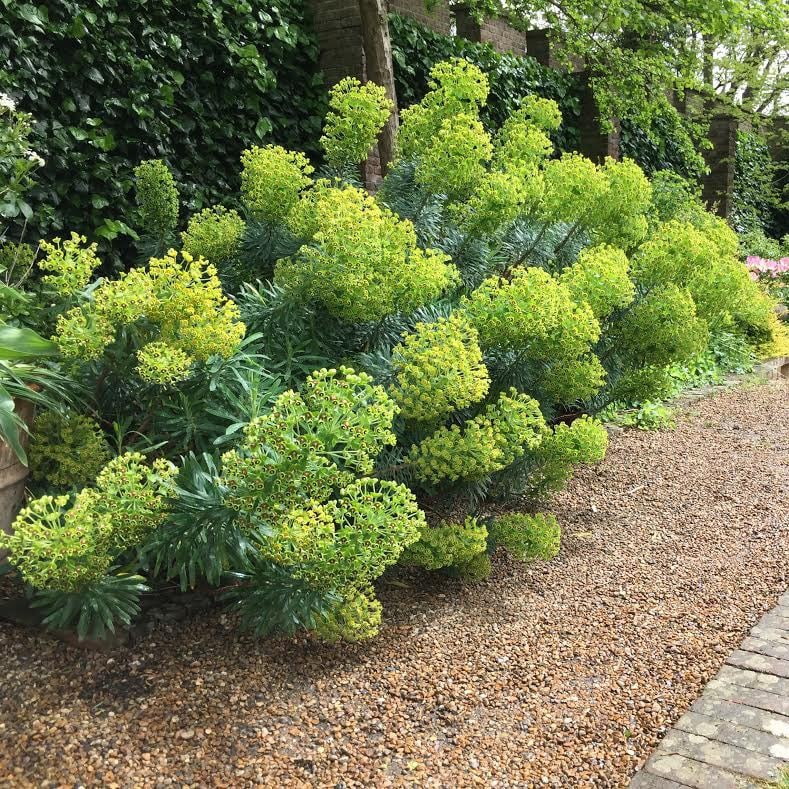
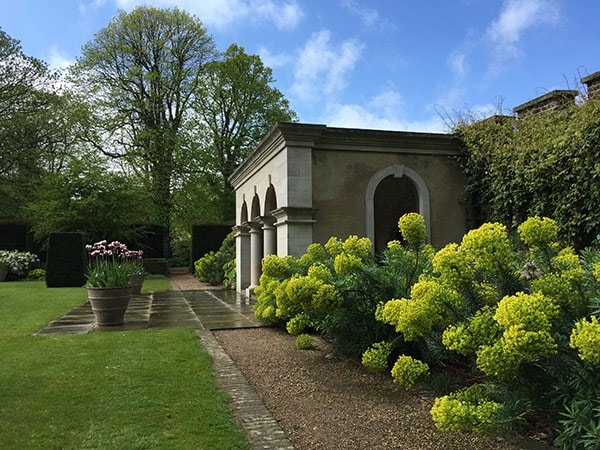
This handsome euphorbia has upright stems clothed with whorls of fleshy, glaucous leaves and topped with huge heads of chartreuse-green flowers with bronze 'eyes' from March to May. The Edwardian garden designer Gertrude Jekyll described this sun-loving, evergreen shrub as 'one of the grandest of plants'. Euphorbia characias originates from the Mediterranean, where it is found on dry rocky slopes and scrubland, so it is very tolerant of drought once it becomes established. It forms a natural rounded shape, and brings structure and an architectural quality to the garden. A tall mainstay of the traditional herbaceous border, it's equally at home in a contemporary minimalist or gravel garden. It may self-seed, but plants rarely come true from seed. - Garden care: Each stem is biennial, so will produce leaves in its first year and flower in its second. Once the stem has produced a flower it should be cut right back to its base, or to a point where there is new growth emerging, in midsummer. This will make way for lots of new, fresh shoots. When working with spurges always wear gloves since the milky sap is poisonous and a potential skin irritant. Remove seedlings as they appear.
- CAUTION toxic if eaten/skin & eye irritant
Do you want to ask a question about this?
If so, click on the button and fill in the box below. We will post the question on the website, together with your alias (bunnykins, digger1, plantdotty etc etc) and where you are from (Sunningdale/Glasgow etc). We'll also post the answer to your question!Q:
Hi I purchased a couple of Euphorbia characias subsp. wulfenii from you which have been planted now for 2.5 - 3 years. I gave one to my neighbour. Mine is in a spot it seems to love which is dry and sunny and has grown to a good size, over 1 metre wide and it sends out a very strong odour for some reason. Its never flowered though and I'm wondering if I'm doing anything wrong? Thanks AndreaAsked on 2/13/2013 by Sandy1 from Lancashire - Fylde Coast1 answer
A:
Hello,
This does sound unusual, as if they are growing in a sunny spot they usually flower really well. It is worth keeping in mind that each stem will only flower in its second year, so it is important not to cut the stems back until they have flowered - or you may never see any. The other thing you can do to give them a bit of a push is to feed it with a fertiliser that is high in potash. Tomorite i ideal.Answered on 2/14/2013 by Helen from Crocus
Q:
What plants would you recommend for my Mediterranean style garden?
Our garden is quite well established and has a Mediterranean feel. We have quite a few spaces that need filling and were hoping you could suggest a few things?Asked on 3/31/2005 by Mrs C Taylor1 answer
A:
We have several plants that might interest you - here are some of the best Lavandula http://www.crocus.co.uk/search/_/search.lavandula/?s=lavandula Cistus http://www.crocus.co.uk/search/_/search.cistus/?s=cistus Kniphofia http://www.crocus.co.uk/search/_/search.kniphofia/?s=kniphofia Euphorbias http://www.crocus.co.uk/search/_/search.euphorbia/?s=euphorbia Yucca filamentosa http://www.crocus.co.uk/plants/_/shrubs/yucca-filamentosa-/classid.4537/ Eryngium http://www.crocus.co.uk/search/_/search.eryngium/?s=eryngium Sedum http://www.crocus.co.uk/search/_/search.sedum/?s=sedum Brachyglottis http://www.crocus.co.uk/plants/_/shrubs/mediterranean-plants/brachyglottis-dunedin-group-sunshine/classid.4376/ Convolvulus cneorum http://www.crocus.co.uk/plants/_/shrubs/mediterranean-plants/convolvulus-cneorum-/classid.940/Answered on 4/1/2005 by Crocus
Q:
What can I plant in a Mediterranean style garden?
I want give my garden a Mediterranean look but I do not know what to plant. Could you please help?Asked on 3/29/2005 by cristina.mures-rodriguez@hsbcib.com1 answer
A:
There are quite a few plants that we sell on the website which will give you a mediterranean feel to your garden - here are some of the best any of the Kniphofias http://www.crocus.co.uk/findplant/results/?CommonName=kniphofia any of the Euphorbias http://www.crocus.co.uk/findplant/results/?CommonName=euphorbia Yucca filamentosa http://www.crocus.co.uk/findplant/results/?CommonName=yucca+fil Stipa tenuissima http://www.crocus.co.uk/findplant/results/?ContentType=Plant_Card&ClassID=1000000022&CategoryID= any of the Eryngiums http://www.crocus.co.uk/findplant/results/?CommonName=eryngium any of the Sedum spectabile http://www.crocus.co.uk/findplant/results/?CommonName=sedum+spect any of the Bergenias http://www.crocus.co.uk/findplant/results/?CommonName=bergenia Erigeron http://www.crocus.co.uk/findplant/results/?CommonName=erigeron Brachyglottis compacta Sunshine http://www.crocus.co.uk/findplant/results/?ContentType=Plant_Card&ClassID=4376&CategoryID= Convolvulus cneorum http://www.crocus.co.uk/findplant/results/?ContentType=Plant_Card&ClassID=940&CategoryID= Phlomis italica http://www.crocus.co.uk/findplant/results/?CommonName=phlomis Lavandula x intermedia Dutch Group http://www.crocus.co.uk/findplant/results/?ContentType=Plant_Card&ClassID=4046&CategoryID= Festuca glauca http://www.crocus.co.uk/findplant/results/?CommonName=Festuca+glauc&x=12&y=10Answered on 3/30/2005 by Crocus
July pruning of trees, shrubs and climbers
Early-summer- flowering shrubs can be pruned this month to keep them vigorous and flowering well. It is also the ideal time to prune several trees that are prone to bleeding if pruned at other times, and it’s not too late...
Read full articleMediterranean
Mediterranean gardens can take on various guises from the rustic and rambling to the formal elegance of an Italian courtyard. However, they all have key features in common, including the use of exotic, sometimes tender, drought-tolerant plants in pots and...
Read full articleEuphorbias
Hardy euphorbias, commonly known as spurges, make ideal plants for any gardener who rates themself as ‘keen but clueless’, yet a little bit adventurous. First and foremost they are excellent garden plants that can be used in the border and...
Read full article


Adds excellent 'bones' to the herbaceous border, Mediterranean or gravelled area and is equally at home in a contemporary or traditional garden
Lucy Summers - Greenfingers Guides