Ribes sanguineum 'Pulborough Scarlet'
flowering currant
- Position: full sun
- Soil: moderately fertile, well-drained soil
- Rate of growth: average to fast-growing
- Flowering period: April
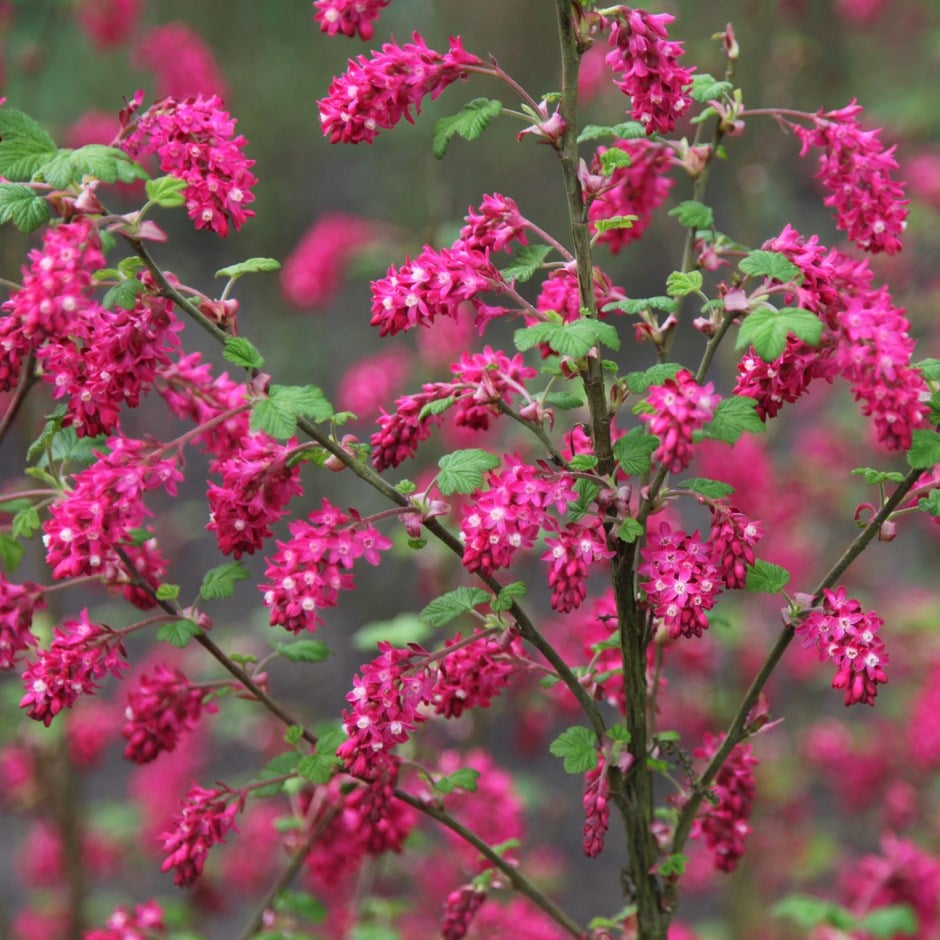
- Flower colour: dark red
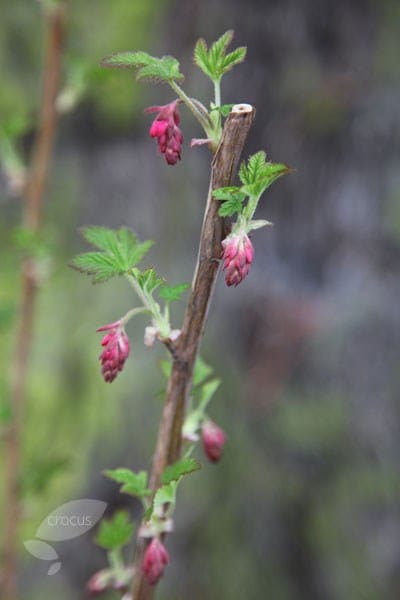
- Other features: bright green leaves
- Hardiness: fully hardy
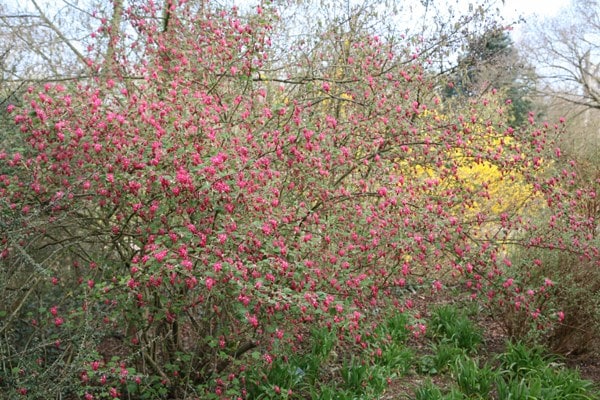
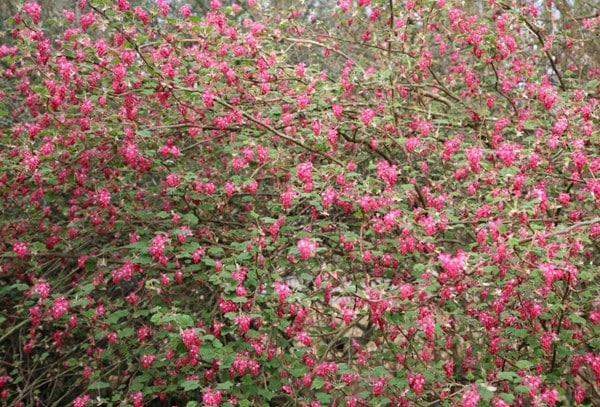
A deciduous, spring-flowering, ornamental shrub with pendent clusters of dark red, tubular flowers which smother the bush in April. This popular form of flowering currant is compact and upright in habit making it ideal for where border space is limited or for growing as an informal, flowering hedge. To prevent the plant from becoming congested in late summer remove any dead or diseased branches and reduce the flowered shoots to a strong, lower bud.
Ribes sanguineum originates from dry open woods and rocky slopes in western North America as far south as California. It was introduced in to Britain in 1817. - Garden care: In late summer remove any dead, diseased or crossing branches to maintain a healthy, open framework and reduce the flowered shoots to a strong, lower bud. Prune specimens grown as hedges immediately after flowering. After pruning apply a generous 5-7cm (2-3in) mulch of well-rotted garden compost around the base of the plant.
- Pests and diseases: Ribes should never be planted near pine trees has it can be a host to white pine blister rust. It is also very susceptible to honey fungus, and aphids, leaf spot and powdery mildew can be a problem.
2 litre pot
within 2-3 days excludes weekends
3 litre pot
within 2-3 days excludes weekends
2lt pot (60cm cane)
within 2-3 days excludes weekends
12lt pot (1.25-1.5m)
available to order from late summer 2013
9cm pot
available to order from autumn 2013
Do you want to ask a question about this?
If so, click on the button and fill in the box below. We will post the question on the website, together with your alias (bunnykins, digger1, plantdotty etc etc) and where you are from (Sunningdale/Glasgow etc). We'll also post the answer to your question!3 Questions | 3 Answers
Displaying questions 1-3
Q:
Hello, I wanted my new garden to be bee friendly but seem to have fallen at the first hurdle. The bumblebee queens are out and about and nothing I've planted so far is in flower besides spring bulbs. The only thing I've seen the bees on is a sun-opening dandelion type thing that's creeping along the fenceline.
What early nectar plants can you recommend so I'm not caught out again next year? I can make room for another shrub or any kind of plant or wildflower. Thank you!Asked on 4/12/2013 by Victoria from Tyne and Wear1 answer
A:
Hello,
It has been an unusually cold spring, s many plants are not coming into bloom as soon as they normally would. There are however several plants worth including in your garden, which will provide a good source of nectar for bees - here are some of the best.
Pulmonarias
http://www.crocus.co.uk/search/_/search.pulmonarias/sort.0/
Aquilegias
http://www.crocus.co.uk/search/_/search.aquilegia/sort.0/
Cardamine
http://www.crocus.co.uk/plants/_/cardamine-pratensis/classid.2000018822/
Hellebores
http://www.crocus.co.uk/search/_/search.helleborus/sort.0/Answered on 4/12/2013 by Helen from Crocus
Q:
Hedging ideas
Hello and hope you can help,- I'm a novice and a hopeless gardener hoping to learn quickly. Do you have any suggestions for mixed hedging for an approx 60 feet boundary? No preference or favourites, though a bit of colour would be appreciated at some time in the seasons but it needs to grow to at least five feet preferably six feet high and act as a barrier to human. I would like it to attract wildlife, particularly the birds and provide some year round interest with colour (hopefully). LawrenceAsked on 3/14/2010 by lawrence dixon1 answer
A:
Hello Lawrence, There are several plants that I would put on the shortlist. Here are my favourites:- Rosa rugosa Alba http://crocus.co.uk/plants/_/shrubs/roses/shrub-rose/hedging/bush-rose/hedging-rose/other-shrub-rose/rosa-rugosa-alba/classid.1148/ Rosa rugosa Rubra http://crocus.co.uk/plants/_/shrubs/roses/shrub-rose/hedging/bush-rose/hedging-rose/other-shrub-rose/rosa-rugosa-rubra/classid.77954/ Elaeagnus x ebbingei Limelight http://crocus.co.uk/plants/_/shrubs/hedging/elaeagnus-%C3%97-ebbingei-limelight/classid.3775/ Ilex x altaclerensis Golden King http://crocus.co.uk/plants/_/shrubs/hedging/ilex-%C3%97--altaclerensis-golden-king/classid.4029/ Ribes sanguineum Pulborough Scarlet http://crocus.co.uk/plants/_/shrubs/hedging/ribes-sanguineum-pulborough-scarlet/classid.4331/ Pyracantha http://crocus.co.uk/search/_/search.pyracantha/ I hope this helps. Helen Plant DoctorAnswered on 3/15/2010 by Crocus Helpdesk
Q:
Hedging and Osmanthus plants
Dear Crocus, I am looking for two Osmanthus burkwoodii plants but notice on your website that you only offer them for sale in 2 litre size. Do you have any larger Osmanthus burkwoodii plants? I am also looking for suggestions on which plants would make a good hedge. I am looking for something hardy, able to stand the frost, evergreen, not poisonous to horses and if possible, not just green possibly red / purple or variegated, any thoughts? Also, as these plants are grown in Surrey, will they be suitable to grow in the Scottish Borders? Many thanks, JaneAsked on 11/29/2009 by Janey Mitch1 answer
A:
Hello Jane, I'm afraid we have all the plants we sell displayed on our website so we do not sell larger sizes of the Osmanthus. As for the hedging, if you click on the link below it will take you to our full range of hedging plants. Unfortunately we do not have anything that meets all your criteria, but if you click on the smaller images it will give you a lot more information on hardiness levels (fully hardy means they can cope with the weather in Scotland) as well as leaf colour etc. Unfortunately though I do not have a list of plants which are not poisonous to horses, but your local vet may be able to help you with this. http://www.crocus.co.uk/plants/_/hedging/plcid.30/ Best regards, Helen Plant DoctorAnswered on 11/30/2009 by Crocus Helpdesk
Displaying questions 1-3
How to create a wildlife-friendly garden

An organic garden should also be a wildlife-friendly garden. Not only is it wonderful to see nature at work, but many creatures will help you achieve better results. The ponds in my garden act as a magnet to dragonflies and...
Read full articleMarch pruning of trees, shrubs and climbers
Use the following notes as a guide when pruning trees, shrubs and climbers in your garden during the month of March. I’ve included timely advice on Abeliophyllum, Artemesia, Brachyglottis, Brunfelsia, Buddleja, Ceanothus, Clematis, Colutea, Cotinus, Daphne, Eccremocarpus, Elsholtzia, ...
Read full article