Cotoneaster horizontalis
cotoneaster
- Position: full sun or partial shade
- Soil: moderately fertile, well-drained soil
- Rate of growth: average to fast-growing
- Flowering period: May
- Hardiness: fully hardy
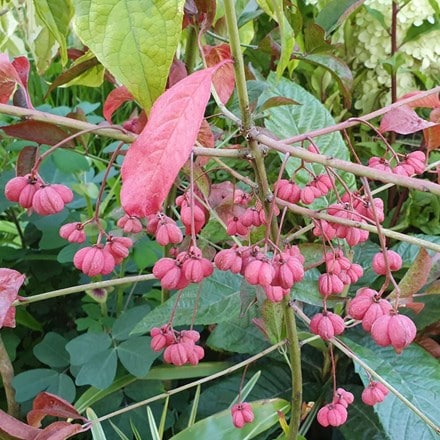
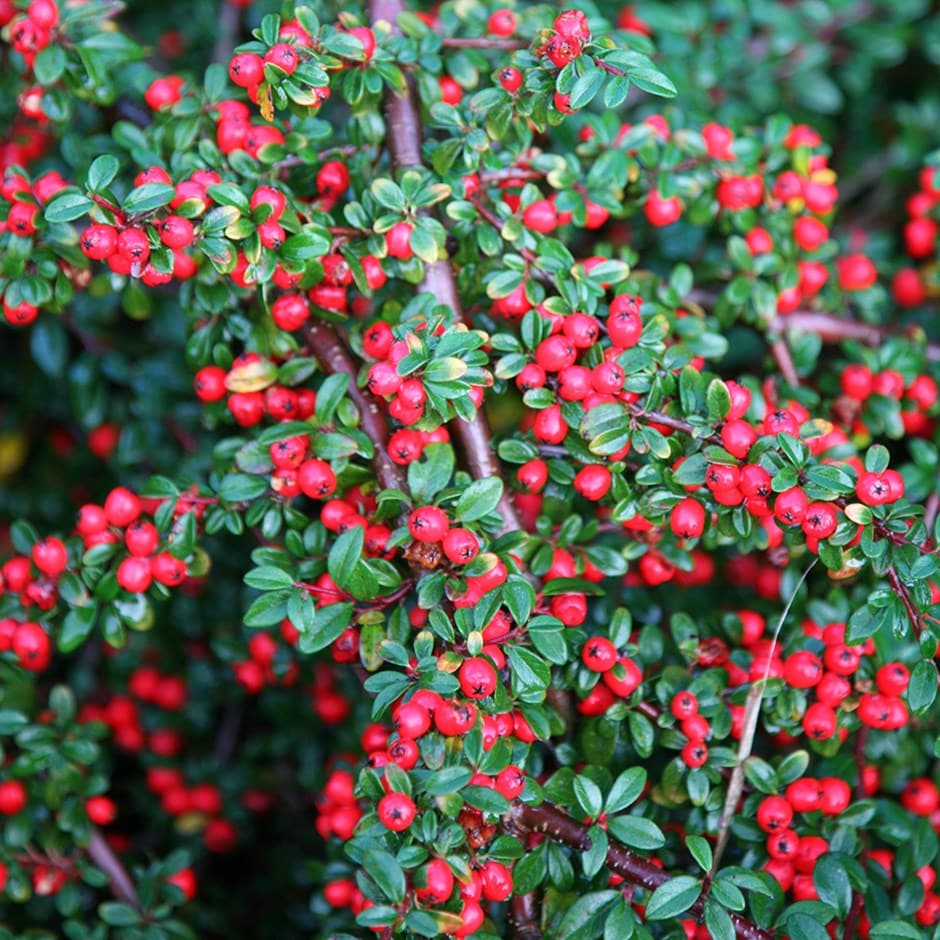
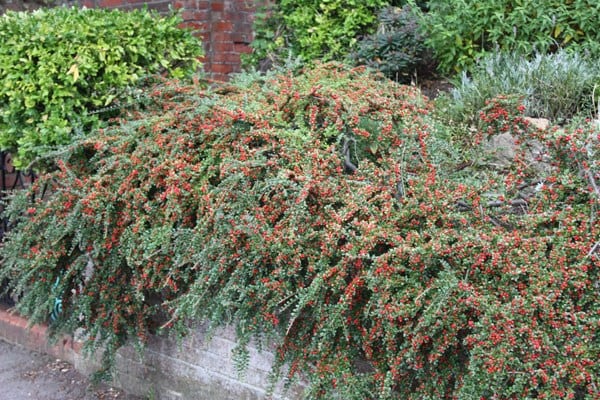
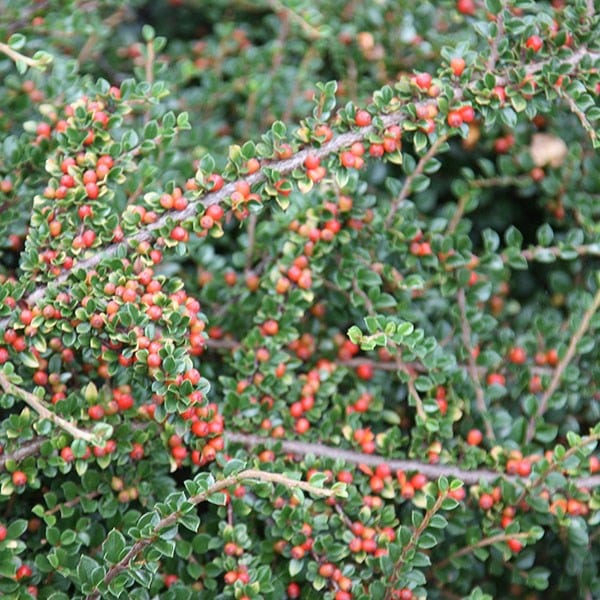
The glossy dark green leaves of this small, spreading, deciduous shrub are studded with tiny, pinkish-white flowers in May, followed by bright red autumn berries. The leaves turn orange-red before they fall. The branches form a pretty herringbone pattern, which means the plant looks stunning grown flat against a wall. It is also an excellent groundcover plant for a sunny border. - Garden care: After flowering, lightly cut back any branches that spoil the symmetry of the plant and apply a generous 5-7cm (2-3in) mulch of well-rotted garden compost or manure around the base of the plant. In autumn trim back lightly any branches that obscure the display of fruit.
Do you want to ask a question about this?
If so, click on the button and fill in the box below. We will post the question on the website, together with your alias (bunnykins, digger1, plantdotty etc etc) and where you are from (Sunningdale/Glasgow etc). We'll also post the answer to your question!Q:
Plants for an difficult area
HELP, please...... I have moved into one of those places where the front garden is just paving blocks (I do need to use it as I have no garage). I have managed to put in a curved triangular bed which is about 5 foot either side - I could increase this by another foot if it helps. The site is extremely windy, catches the frosts and only gets the sun in the late afternoon. Also rain runs down into this area. I am looking for ideas on what to plant......should I go for several small plants, or one specimen plant? Nothing can get taller than around 3 - 4 foot. I also plan to put some spring bulbs in, but I don't want to give myself too much work as I am a pensioner and on my own, and already have a reasonable sized back garden to cope with. Is this impossible or can you help me? Many thanks SueAsked on 3/18/2010 by Susan Chipchase1 answer
A:
Hello Sue, This does sound like a pretty inhospitable situation, so you will need some tough plants - here are your best options. Cotoneaster horiontalis http://www.crocus.co.uk/plants/_/shrubs/cotoneaster-horizontalis-/classid.1028/ Cotoneaster dammeri http://www.crocus.co.uk/plants/_/shrubs/cotoneaster-dammeri-/classid.1021/ Sarcococca confusa http://www.crocus.co.uk/search/_/search.sarcococca/ Viburnum davidii http://www.crocus.co.uk/plants/_/shrubs/viburnum-davidii-/classid.8067/ Aucuba (which can be cut back hard when necessary) http://www.crocus.co.uk/search/_/search.aucuba/ Skimmia http://www.crocus.co.uk/search/_/search.skimmia/ I hope this gives you a few ideas. Helen Plant DoctorAnswered on 3/18/2010 by Crocus Helpdesk
Q:
Suggestions for planting low maintenance border please
Hello, I recently had my garden extended by a piece of land measuring 34 metres by 14 metres, and my son purchased 23 Phormiums from you in last August on my behalf. I was delighted with the service I received, and the plants appear to be thriving well especially considering the dreadful weather we have suffered this winter. We also bought Rootgrow from you to assist with their development ,and also for use when we moved mature Acers and other shrubs. I still need more shrubs or other types of plants and would appreciate some advice as to what to use. Along one of the 14 metre lengths there is a "hedge" of bamboo plants, and adjacent to these on the return (long) length there is a small rise of earth, tapering down to ground level, with a specimen black bamboo at the end of the mound. There is also a mature acer, which we had to move, situated at the edge of the dividing path (between the lawn) on the field side of the garden. Would it be possible for you to suggest the names of suitable plants which I could purchase from you and which would compliment the existing ones. I am in my eighties and therefore need a very low maintenance garden. I would also like to introduce a little colour if possible. My garden is very exposed and is on quite a windy site. I look forward to your reply.Asked on 2/15/2010 by Marian Burgess1 answer
A:
Hello there, There are many plants that might tempt you - here are some of my favourites:- Fatsia japonica http://www.crocus.co.uk/plants/_/shrubs/fatsia-japonica/classid.3840/ Rodgersia http://www.crocus.co.uk/search/_/search.rodgersia/cat.plants/ Heuchera http://www.crocus.co.uk/search/_/search.heuchera/cat.plants/ Hydrangea paniculata http://www.crocus.co.uk/search/_/search.hydrangea-paniculata/ Aucuba japonica http://www.crocus.co.uk/plants/_/shrubs/aucuba-japonica/classid.277/ Rosa rugosa Alba http://www.crocus.co.uk/plants/_/shrubs/roses/shrub-rose/hedging/bush-rose/hedging-rose/other-shrub-rose/rosa-rugosa-alba/classid.1148/ Cotoneaster http://www.crocus.co.uk/search/_/search.cotoneaster/ Buddleja http://www.crocus.co.uk/search/_/search.buddleja/ I hope this helps, Helen Plant DoctorAnswered on 2/16/2010 by Crocus Helpdesk
Q:
Plants to replace a lawn
Dear Sir I have a small lawn at the front of my garden and want to use plants other than grass. Can you give me some ideas of plants that could give a low effect of green or some planting scheme that would look ok ? RichardAsked on 1/19/2010 by richard wood1 answer
A:
Hello Richard, There are loads of things that you could plant in this area - here are some of the best. Pachysandra http://www.crocus.co.uk/plants/_/shrubs/prices-that-have-been-pruned/pachysandra-terminalis-/classid.3288/ Lamium http://www.crocus.co.uk/plants/_/perennials/lamium-maculatum-beacon-silver/classid.3133/ Cotoneaster dammeri http://www.crocus.co.uk/plants/_/shrubs/cotoneaster-dammeri-/classid.1021/ Cotoneaster horizontalis http://www.crocus.co.uk/plants/_/shrubs/cotoneaster-horizontalis-/classid.1028/ Ajuga http://www.crocus.co.uk/search/_/search.ajuga/ Vinca http://www.crocus.co.uk/search/_/search.vinca/ Liriope http://www.crocus.co.uk/plants/_/perennials/liriope-muscari-/classid.3173/ Bergenia http://www.crocus.co.uk/search/_/search.bergenia/ Heuchera http://www.crocus.co.uk/search/_/search.heuchera/ Calluna http://www.crocus.co.uk/search/_/search.calluna/ Geranium http://www.crocus.co.uk/plants/_/perennials/mediterranean-plants/geranium-sanguineum-var.-striatum/classid.2000007127/ I hope this gives you a few ideas, Helen Plant DoctorAnswered on 1/20/2010 by Crocus Helpdesk
Q:
Trailing plant to cover a wall
Afternoon, I am looking for a trailing colourful (ideally evergreen) plant to cover a wall below a flower bed in London.The ground floor of my house overlooks this wall which faces north so it would be so improved to be covered in greenery and colour. Are there any trailing roses? I am not sure Aubretia would be 'large' enough. Thank you HelenAsked on 10/7/2009 by Helen Pennant-Rea1 answer
A:
Hello Helen, There are a couple of roses which could be used to tumble over the edge, but they would not be evergreen, and they will not produce many flowers in the shade. A better alternative would be Cotoneaster horizontalis, which although deciduous would grow well and give spring flowers and autumn berries - just click on the following link to take you straight to it. http://www.crocus.co.uk/plants/_/shrubs/cotoneaster-horizontalis-/classid.1028/ I hope this helps. Helen Plant DoctorAnswered on 10/8/2009 by Crocus Helpdesk
Q:
Why hasn't my Cotoneaster produced fruit?
I bought a Cotoneaster shrub from you approx 18 months ago and it has not produced any berries. It did not even flower in the spring. Can you please tell me why?Asked on 9/27/2006 by customerservice@crocus.co.uk1 answer
A:
It is relatively common for newly planted shrubs to direct all their attention into producing a good root system rather than flowers or fruit so it may just need time to settle in. There are however several other reasons why plants don't produce flowers (and later fruit). These include too much shade, not enough water during the summer months or it may just be the type of fertilizer you are using. Fertilizers that contain high amounts of nitrogen will promote lots of healthy leaf growth, while potash encourages fruit and flowers. Therefore, to give your Cotoneaster a bit of a push, you should feed it with Sulphate of Potash throughout the growing season.Answered on 9/28/2006 by Crocus
Q:
Which plants are Deer proof?
I want a list of Deer proof plants please. It`s either a change in habitat or environment, but I get total devastation now and in the last two years they come up the drive.Asked on 2/3/2006 by david1 answer
A:
Deer can be a real problem and deer proof plants are usually thorny, poisonous or simply taste awful, but it is hard to give a definitive list as you might get the odd deer with unusual tastes which might like the bitter taste! Below is a list of good plants that generally are quite successful though. Cornus varieties, Rhus, Sophora, Solanum, Berberis, Rosemary, Buxus, Cotoneaster, Ilex, Pyracantha, Garrya, Juniperus, Nandina, Elaeagnus, Aralia, Aucuba, Cortaderia, Yucca, Santolina, Hypericum, Myrtle, Vinca, Achillea, Digitalis, Echinacea and Dryopteris. Finally, fencing is one method to protect garden crops from deer. Since deer jump, you need an 8-foot fence for best results or stout chicken-wire fencing securely around smaller garden plots. Alternatively, fence the area with a thorny shrub, preferably something that will grow to at least 6 feet. Deer eat roses and some thorns but hawthorn, boxwood and holly will exclude them. Deer are also deterred by dogs, hanging aluminum foil, mirrors, wood that hits objects in the wind and other noise-makers. Some old-fashioned repellents are human hair and blood and bonemeal. Hanging bars of fragrant deodorant soap from branches may work. Other well-known deer repellents are mothballs or moth flakes spread on the ground or put in mesh bags for hanging in a tree. Unfortunately though, no repellent is 100 percent effective, especially if the deer population is high and deer are starving.Answered on 2/6/2006 by Crocus
Q:
What can I plant that the deers won't eat?
What types of plants do deer not like? If you could help me out I could greatly appreciate it.Asked on 3/18/2005 by Kelly L. Sliker1 answer
A:
Deer can be a real problem and deer proof plants are usually thorny, poisonous or simply taste awful. It is hard to give a definitive list as you might get the odd deer with unusual taste which might like a bitter taste, but the following is a list of plants that generally are quite successful. Cornus varieties, Rhus, Sophora, Solanum, Berberis, Rosemary, Buxus, Cotoneaster, Ilex, Pyracantha, Garrya, Juniperus, Nandina, Eleagnus, Aralia, Aucuba, Cortaderia, Yucca, Santolina, Hypericum, Myrtle, Vinca, Achillea, Digitalis, Echinacea and Dryopteris. Finally fencing is one method to protect garden crops from deer. Since deer jump, you need an 8-foot fence for best results or stout chicken-wire fencing securely around smaller garden plots. Alternatively, fence the area with a thorny shrub, preferably something that will grow to at least 6 feet. Deer do eat roses and some other thorns but hawthorn, boxwood and holly tend to keep them out. Deer are also deterred by dogs, hanging aluminum foil, mirrors, wood that hits objects in the wind and other noise-makers. Some old-fashioned repellents are human hair and blood and bonemeal. Hanging bars of fragrant deodorant soap from branches may work. Other well-known deer repellents are mothballs or moth flakes spread on the ground or put in mesh bags for hanging in a tree. Unfortunately though, no repellent is 100 percent effective, especially if the deer population is high and deer are starving.Answered on 3/21/2005 by Crocus
How to create a wildlife-friendly garden

An organic garden should also be a wildlife-friendly garden. Not only is it wonderful to see nature at work, but many creatures will help you achieve better results. The ponds in my garden act as a magnet to dragonflies and...
Read full articleDeer
Symptoms Deer eat a wide range of plants and usually visit the garden between dusk and dawn. Sometimes the deer have a particular taste for flowers and will eat tulip blooms, but usually it is whole shoots that are lost. Tree...
Read full articleFebruary pruning of trees, shrubs and climbers
The garden is at its most dormant right now, so it’s a good time to catch up on any pruning missed or forgotten since the autumn. If the weather isn’t favourable, you can leave it for a week or two,...
Read full articleJanuary pruning of trees, shrubs and climbers
My gardening resolution this year is to keep on top of my pruning and that means getting out into the garden with my secateurs every month. The garden is at its most dormant right now, so it’s a good time...
Read full articleDecember pruning of trees, shrubs and climbers
My gardening resolution this year is to keep on top of my pruning and that means getting out into the garden with my secateurs every month. The garden is at its most dormant right now, so it’s a good time...
Read full article