

Sorbus aucuparia
mountain ash, rowan
Rounded tree with mid- to rich green leaves that turn deep red and yellow in autumn, especially after cool summers. Sprays of...
9 litre pot | 1.2 - 1.5m tall
£64.99
In stock (shipped within 3-5 working days)
12 litre pot | 1.5 - 1.8m tall
£119.99
In stock (shipped within 3-5 working days)
bare root | 1.2m tall
£39.99
available to order from autumn 2024
1
Plant description
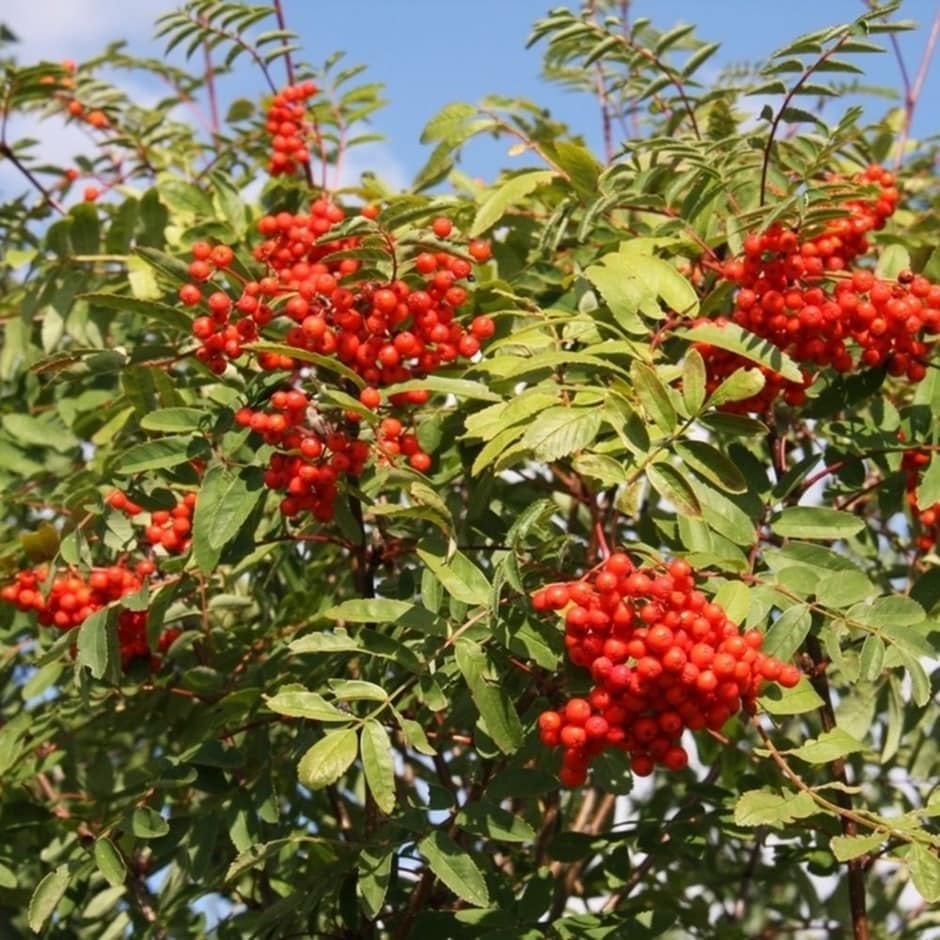
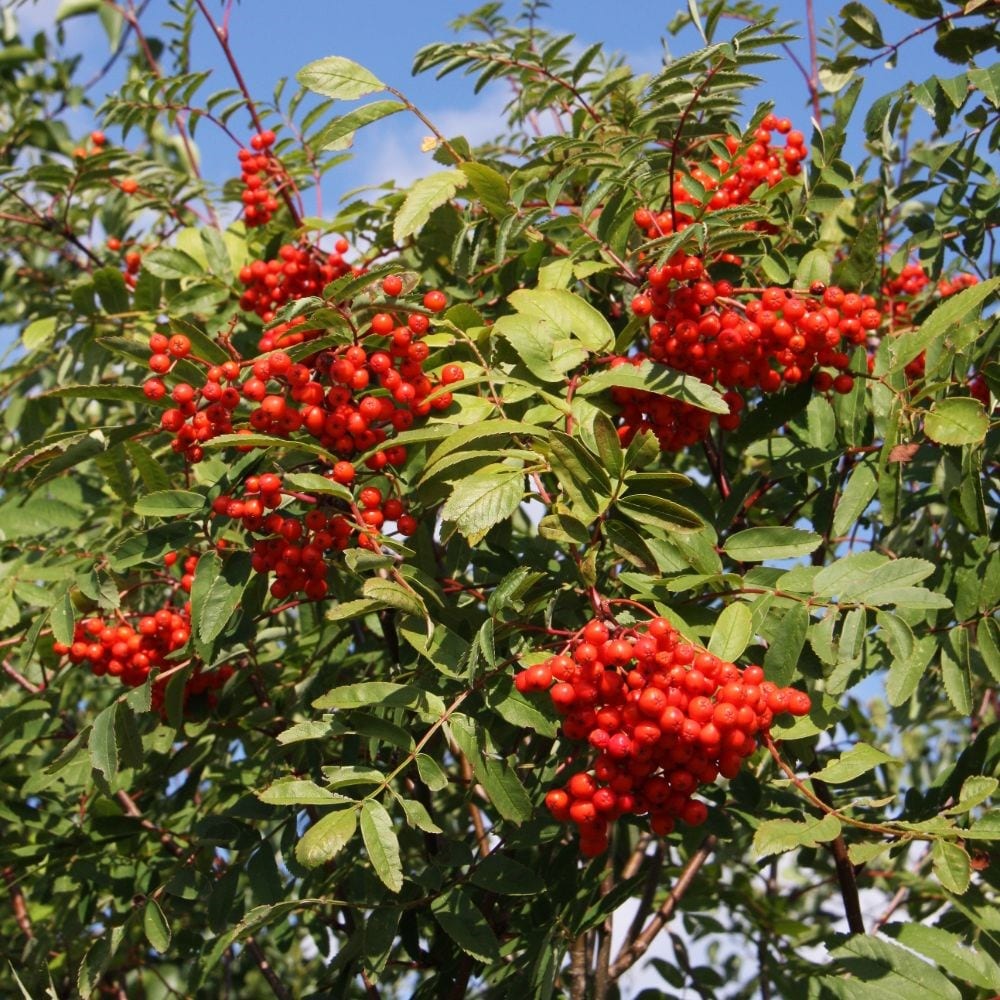
Rounded tree with mid- to rich green leaves that turn deep red and yellow in autumn, especially after cool summers. Sprays of tiny white flowers cover the tree in late spring, followed by bunches of red berries in autumn. Berries are quickly eaten by birds making it ideal for a wild or woodland garden. This conical-shaped tree can also tolerate harsh conditions and is perfect for a small urban garden.
Eventual height & spread
Flowering period
- Jan
- Feb
- Mar
- Apr
- May
- Jun
- Jul
- Aug
- Sep
- Oct
- Nov
- Dec
Plant features
Position
Full sun / light shade
Rate of growth
Average
Soil
Moderately fertile, moist, well-drained soil
Hardiness
Fully hardy
How to care for Sorbus aucuparia:
Requires minimal pruning. Remove any broken, diseased or crossing branches in late autumn or winter. When planting incorporate lots of well-rotted garden compost in the planting hole and stake firmly.
Please note:
This tree is deciduous so it will lose all its leaves in autumn, then fresh new foliage appears again each spring.
Warning
Humans/Pets: Fruit are ornamental - not to be eaten