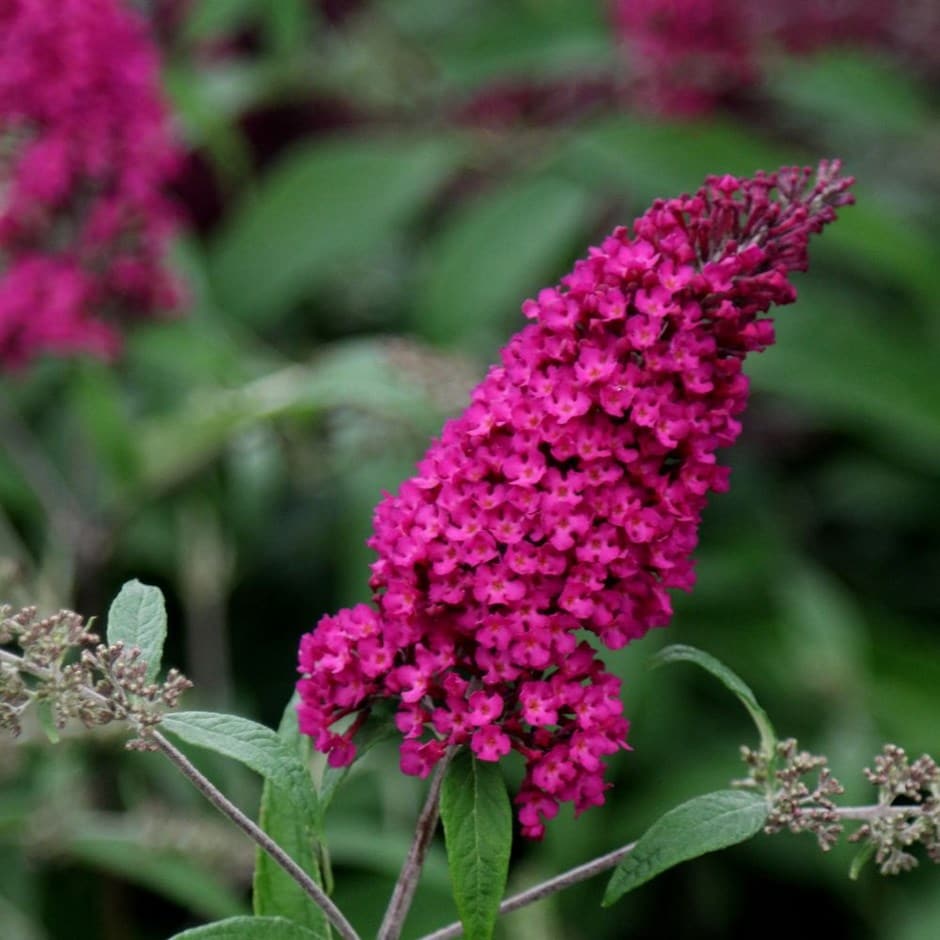
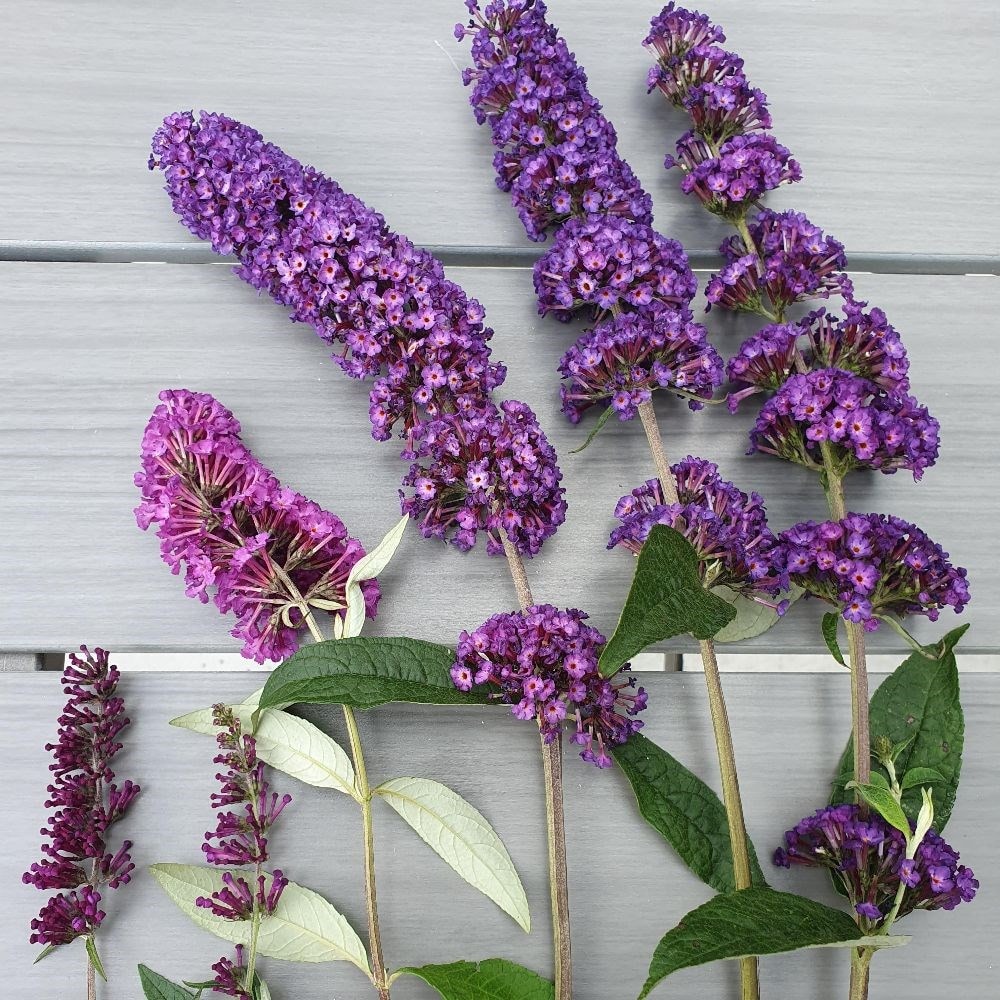
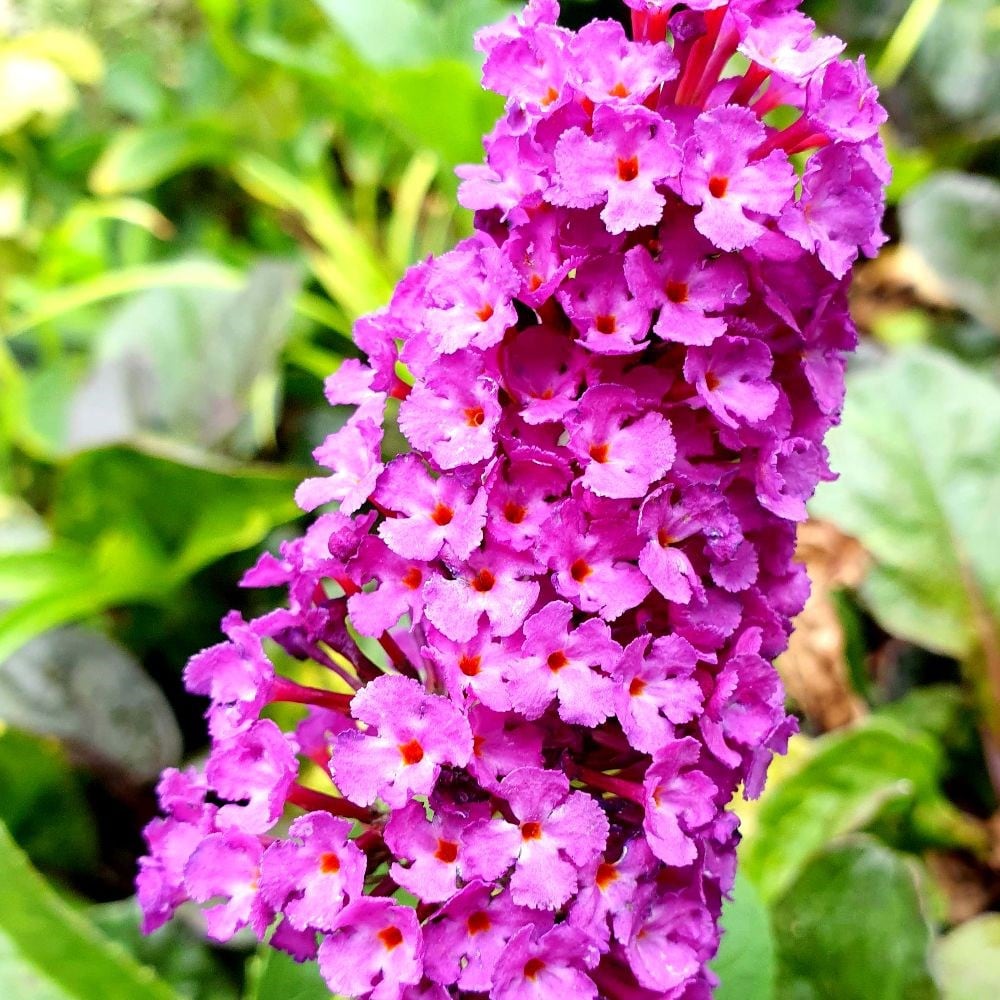
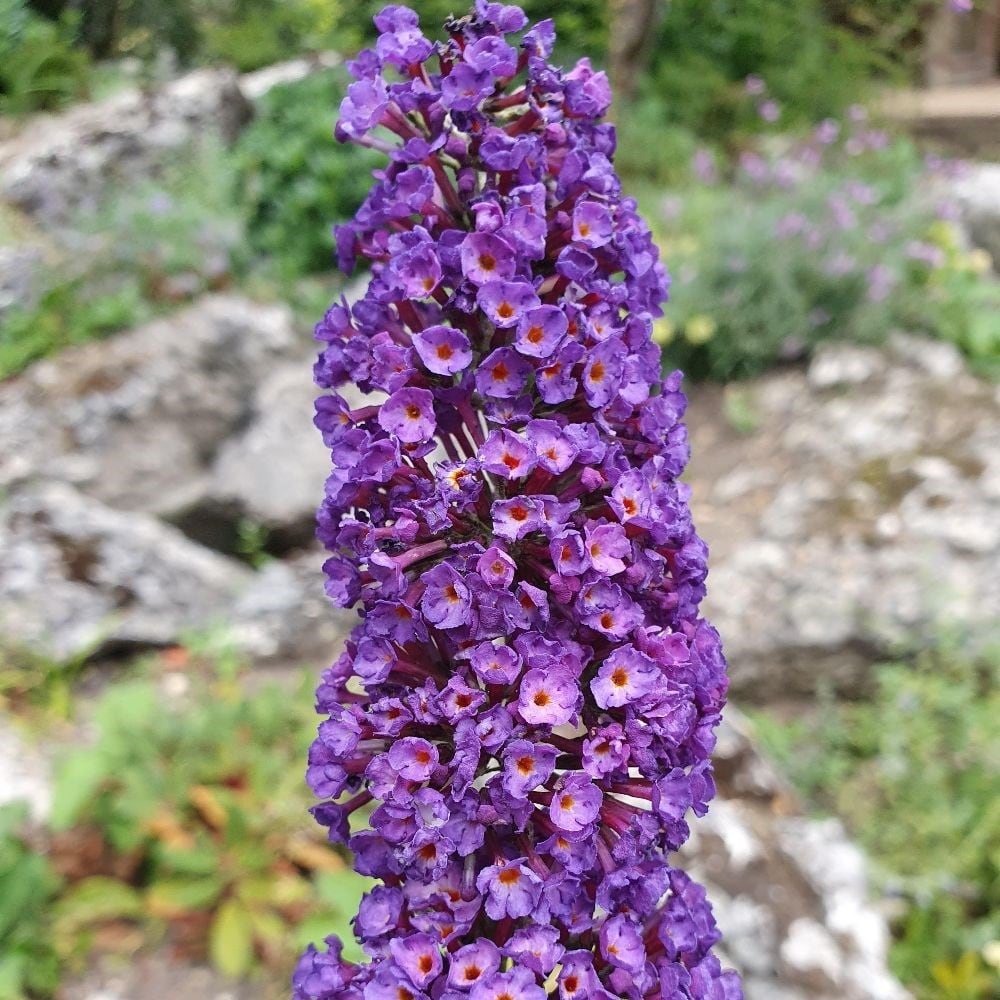
Buddleja davidii 'Royal Red'
Butterfly Bush
- Position: full sun
- Soil: fertile, well-drained soil
- Rate of growth: fast-growing
- Flowering period: July to September
- Flower colour: dark red-purple
- Other features: autumn colour, scented flowers attractive to butterflies
- Hardiness: fully hardy
- Garden care: Prune back hard in March, removing all of the previous year's growth to three or four buds.
Clusters of fragrant, dark red-purple flowers, which are very attractive to butterflies, top the gently arching branches from midsummer. This butterfly bush produces some of the largest blooms currently available, and if the shrub is pruned hard each spring, the honey-scented flowerspikes can grow up to an impressive 50cm (20in) long. The mid- to grey-green leaves, will turn butter-yellow in autumn before they fall, and this coupled with the showy flowers, makes it a fine specimen for a sunny position.
Do you want to ask a question about this?
If so, click on the button and fill in the box below. We will post the question on the website, together with your alias (bunnykins, digger1, plantdotty etc etc) and where you are from (Sunningdale/Glasgow etc). We'll also post the answer to your question!Q:
Suggestions for planting low maintenance border please
Hello, I recently had my garden extended by a piece of land measuring 34 metres by 14 metres, and my son purchased 23 Phormiums from you in last August on my behalf. I was delighted with the service I received, and the plants appear to be thriving well especially considering the dreadful weather we have suffered this winter. We also bought Rootgrow from you to assist with their development ,and also for use when we moved mature Acers and other shrubs. I still need more shrubs or other types of plants and would appreciate some advice as to what to use. Along one of the 14 metre lengths there is a "hedge" of bamboo plants, and adjacent to these on the return (long) length there is a small rise of earth, tapering down to ground level, with a specimen black bamboo at the end of the mound. There is also a mature acer, which we had to move, situated at the edge of the dividing path (between the lawn) on the field side of the garden. Would it be possible for you to suggest the names of suitable plants which I could purchase from you and which would compliment the existing ones. I am in my eighties and therefore need a very low maintenance garden. I would also like to introduce a little colour if possible. My garden is very exposed and is on quite a windy site. I look forward to your reply.Asked on 2/15/2010 by Marian Burgess1 answer
A:
Hello there, There are many plants that might tempt you - here are some of my favourites:- Fatsia japonica http://www.crocus.co.uk/plants/_/shrubs/fatsia-japonica/classid.3840/ Rodgersia http://www.crocus.co.uk/search/_/search.rodgersia/cat.plants/ Heuchera http://www.crocus.co.uk/search/_/search.heuchera/cat.plants/ Hydrangea paniculata http://www.crocus.co.uk/search/_/search.hydrangea-paniculata/ Aucuba japonica http://www.crocus.co.uk/plants/_/shrubs/aucuba-japonica/classid.277/ Rosa rugosa Alba http://www.crocus.co.uk/plants/_/shrubs/roses/shrub-rose/hedging/bush-rose/hedging-rose/other-shrub-rose/rosa-rugosa-alba/classid.1148/ Cotoneaster http://www.crocus.co.uk/search/_/search.cotoneaster/ Buddleja http://www.crocus.co.uk/search/_/search.buddleja/ I hope this helps, Helen Plant DoctorAnswered on 2/16/2010 by Crocus Helpdesk
Q:
Help with Actaea simplex and Buddleja davidii please
Hello, I recently ordered some really lovely plants from you, all of them are doing really well in my garden, but, I have just noticed that the Actaea simplex 'Pink Spike' is now not looking too good. Today I noticed that the 3 large leaves on the plant now have a brown crusty edging to them and they are no longer look very healthy, would you know why this may have happened? I have watered it the same as all of my other plants, so I'm very unsure why this has happened. Could it be overwatering, as the soil where it is planted is quite heavy? Any ideas? Also I've got a Buddleja davidii 'Royal Red', which is suffering from yellowing leaves, and falling off the plant. I don't think Buddlejas suffer from chlorosis, but could this be a result of overwatering too? If you can help me that would be fantastic and much appreciated, Kindest regards, NickAsked on 9/3/2009 by Gleaming Gem1 answer
A:
Hello Nick, The Actaea likes a moist soil, so it is unlikely to be suffering from too much water unless it is really boggy. They are herbaceous perennials though, so it will be starting to die back now, and I suspect this is it,-simply a part of their normal life cycle. The leaves will continue to deteriorate in autumn and disappear altogether in winter. I have added some notes to your order about your concerns, so if the plant fails to put on lots of new, lush growth in spring then please get back to us and we will happily replace it. As for the Buddleja, they also start to lose their leaves at this time of the year, but although they can be watered freely in summer, they prefer a drier soils when not actively growing, so you should cut back now. I hope this helps. HelenAnswered on 9/4/2009 by Crocus Helpdesk
Q:
Summer flowering tree
Hello, I am looking for a tree that can grow as tall as 8ft-10ft and flowers for most of the summer, or even one that flowers in the winter. I am looking to add a large tree with colourful flowers to my garden - I do love the Laburnum x watereri 'Vossii' but it only flowers from May to June I believe. Can you recommend at suitable tree? Regards LauraAsked on 7/5/2009 by LAURA BLIZARD1 answer
A:
Hello Laura, Even a miniature tree will get taller than 8-10ft, so I suspect you may be looking for a shrub, which are generally more compact. The ones that will flower for months on end throughout summer are either Buddlejas or Lavatera. I'm afraid I don't know of any trees (no matter what size) that will match them.Answered on 7/8/2009 by Crocus Helpdesk
Q:
Rabbit proof shrubs
Dear Sirs We are planning to plant a 30mt long border with flowering shrubs and have assorted colours of Rhododendrons in mind. Our main concern is that the shrubs must be rabbit proof as the border is adjacent to woods and a large grassed area. Also, where possible we would like to have 'flowers' on the shrubs throughout the summer. Would you be able to provide a picking list of suitable shrubs? Thank you for your prompt attention AndyAsked on 6/15/2009 by Clark, Andy (buying)1 answer
A:
Hello there, These are really troublesome pests, and there are no effective deterrents available (apart from getting a guard dog) which will be any help to you. They tend to prefer leaves and soft stems rather than flowers and woody stems, and they seem to prefer feeding in exposed positions and often nibble plants at the edge of borders. This habit can be used to the gardener's advantage by planting more valuable subjects in the centre of beds. In winter, when food is scarce, deciduous plants at the edge of beds will not interest rabbits, and will help protect winter flowers in the centre. Below is a list of flowering shrubs which they usually tend to leave alone. Buddleia davidii, Ceanothus Cistus Cotoneaster dammeri Deutzia Hebe Hypericum Hydrangea Mahonia aquifolium Potentilla fructicosa Rhododendron spp. I hope this helps. Helen Plant DoctorAnswered on 6/17/2009 by Crocus Helpdesk
How to create a wildlife-friendly garden

An organic garden should also be a wildlife-friendly garden. Not only is it wonderful to see nature at work, but many creatures will help you achieve better results. The ponds in my garden act as a magnet to dragonflies and...
Read full articleDealing with common pests and diseases
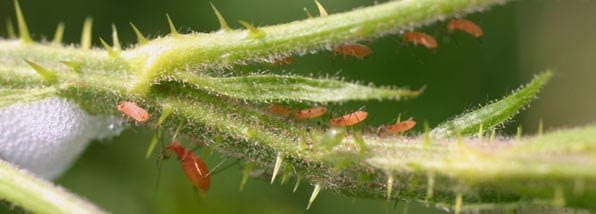
One of the first things you learn when you start gardening is that plants are not alone in the garden. There is a whole host of bugs that set up home in...
Read full articleJune pruning of trees, shrubs and climbers
June is a time to relax and enjoy your garden, but there are still some early flowering shrubs that will need pruning if they are to produce the best possible displays year after year. A few shrubs can also be...
Read full articleSeaside
Gardening by the coast offers specific challenges and opportunities. You can take advantage of the mild climate to grow not-so-hardy plants with confidence, but will have to choose them carefully to ensure they can cope with the buffeting winds...
Read full articleAphids

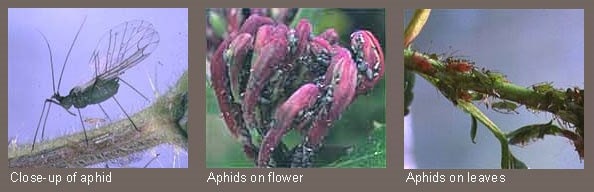
Symptoms Most commonly thought of as the small, fat, green insects covering roses. However, aphids can also be black, yellow, pink, greyish-white and brown. They are all about 2mm long, round and full of sap. Harm Bad infestations can reduce the vigour of...
Read full articleMarch pruning of trees, shrubs and climbers
Use the following notes as a guide when pruning trees, shrubs and climbers in your garden during the month of March. I’ve included timely advice on Abeliophyllum, Artemesia, Brachyglottis, Brunfelsia, Buddleja, Ceanothus, Clematis, Colutea, Cotinus, Daphne, Eccremocarpus, Elsholtzia, ...
Read full articleChelsea Chop and other methods of extending the flowering season
Many gardeners who are happy, even gung-ho, with the secateurs when pruning shrubs and climbers are surprisingly reluctant to take the shears to herbaceous perennials. Maybe this is because it just doesn’t seem quite right to be cutting back all...
Read full article