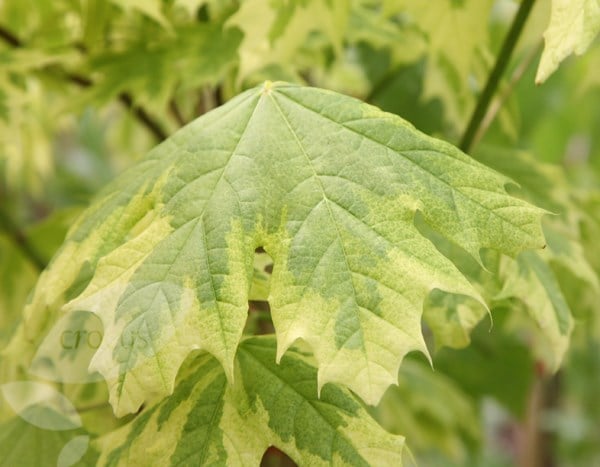
Acer platanoides 'Drummondii'
Norway maple
- Position: full sun or partial shade
- Soil: fertile, moist, well-drained
- Rate of growth: vigorous
- Flowering period: April to May
- Flower colour: yellow
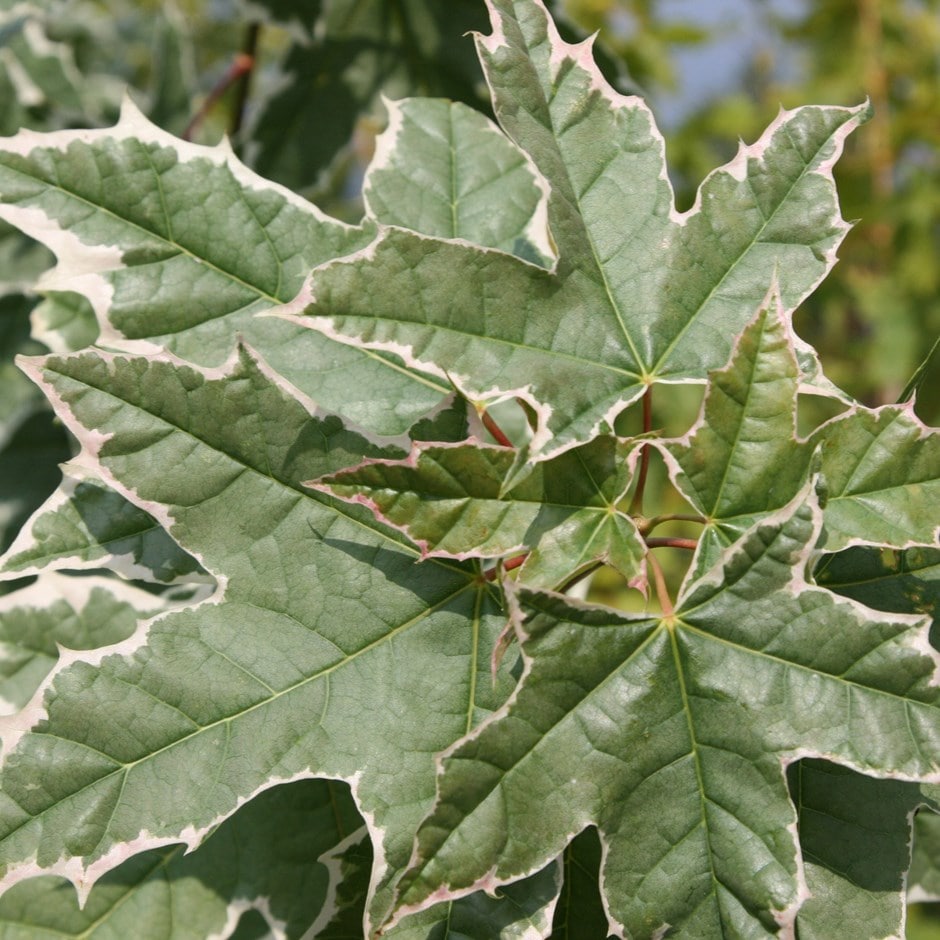
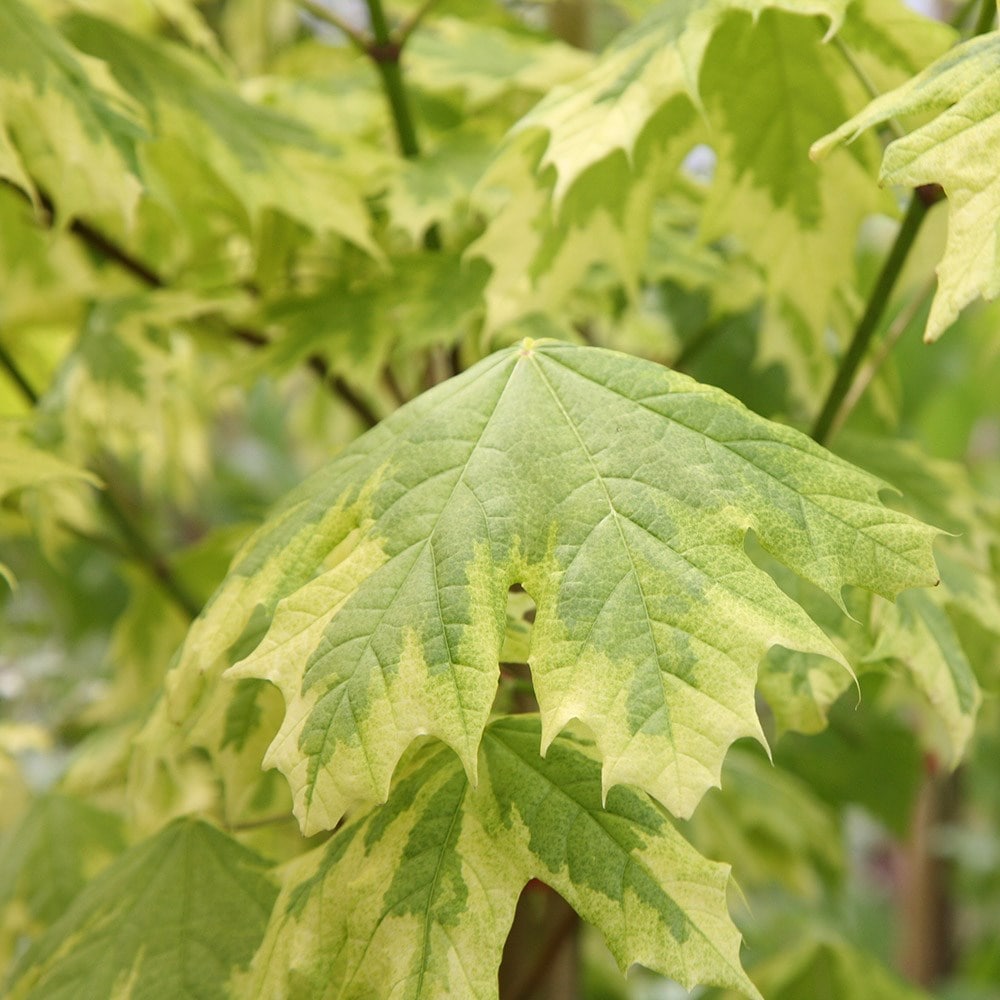
- Other features: creamy-white edged leaves turn orange in autumn
- Hardiness: fully hardy
Dark green leaves with creamy-white margins turning orange in autumn and small clusters of red-tinged, yellow spring flowers. This handsome, round-headed tree is possibly the best variegated Norway maple. An excellent specimen tree for a medium-sized garden, it is pollution-tolerant and copes well on most soils, including clay. - Garden care: Add a top-dressing of a multi-purpose fertiliser around the base of the plant in late spring. No routine pruning is required, just remove any dead, damaged or crossing branches in late autumn or winter when they are fully dormant.
1.7 litre pot
within 2-3 days excludes weekends
2 litre pot
within 2-3 days excludes weekends
9cm pot
within 2-3 days excludes weekends
2 litre pot
available to order from autumn 2013
Do you want to ask a question about this?
If so, click on the button and fill in the box below. We will post the question on the website, together with your alias (bunnykins, digger1, plantdotty etc etc) and where you are from (Sunningdale/Glasgow etc). We'll also post the answer to your question!3 Questions | 3 Answers
Displaying questions 1-3
Q:
How can we stop Powdery Mildew on our Norway Maple tree?
Hi. We purchased a Norway Maple tree around 3 years ago from Crocus, and every year towards the end of the Summer, the leaves have a powdery white mildew on them. We do have clay soil, but try to keep the tree well watered in dry weather. We have also tried a mildew spray, this seems to prevent any further mildew from appearing at the time. Do you have any suggestions as to how we can stop it appearing this year? Many thanks for your time. FionaAsked on 2/15/2010 by Anonymous1 answer
A:
Hello Fiona, Powdery Mildew is caused by poor air circulation around the branches and dry soil around the roots. We do have a page on our site which you may find useful so just click on the following link to go straight to it. http://www.crocus.co.uk/pestsanddiseases/_//top12/Powdery%20mildew/ArticleID.1174 I hope this helps. Helen Plant DoctorAnswered on 2/16/2010 by Crocus Helpdesk
Q:
Fungus and dry leaves on Acer?
Hi there, I have noticed in the last week that one of my Acers has developed very dry yellowed leaves and a white soft fungus on its bark, what do you think this could be? My other Acers are fine, but I'm worried that this will spread. What can I do to remove/avoid this? Kind regardsAsked on 9/14/2009 by nikki craig1 answer
A:
Hello There, Acers are prone to a number of pests and diseases, but I suspect yours is suffering from a wooly scale - just click on the following link for more information. http://www.crocus.co.uk/pestsanddiseases/_/pests-and-diseases/stems/artcat.6/ I hope this helps. Helen Plant DoctorAnswered on 9/23/2009 by Crocus Helpdesk
Q:
Is there an evergreen Acer?
Could I just ask if there is an Acer that is not 'deciduous' but 'evergreen'?Asked on 3/14/2005 by Susan McGarragh1 answer
A:
Sadly not as all Acers are deciduous.Answered on 3/16/2005 by Crocus
Displaying questions 1-3
November pruning of trees and shrubs
By November the garden is well and truly dormant, so it’s a good time to prune many deciduous garden trees. As for October, prune newly planted trees to remove any damaged growth and help balance the shape of the canopy...
Read full articleFebruary pruning of trees, shrubs and climbers
The garden is at its most dormant right now, so it’s a good time to catch up on any pruning missed or forgotten since the autumn. If the weather isn’t favourable, you can leave it for a week or two,...
Read full articleAutumn Colour

Perhaps it is because the colours of autumn are so variable in the Uk, that we value them all the more when they appear. As levels of sunlight fall in autumn and the days become shorter, photosynthesis is no longer...
Read full article