


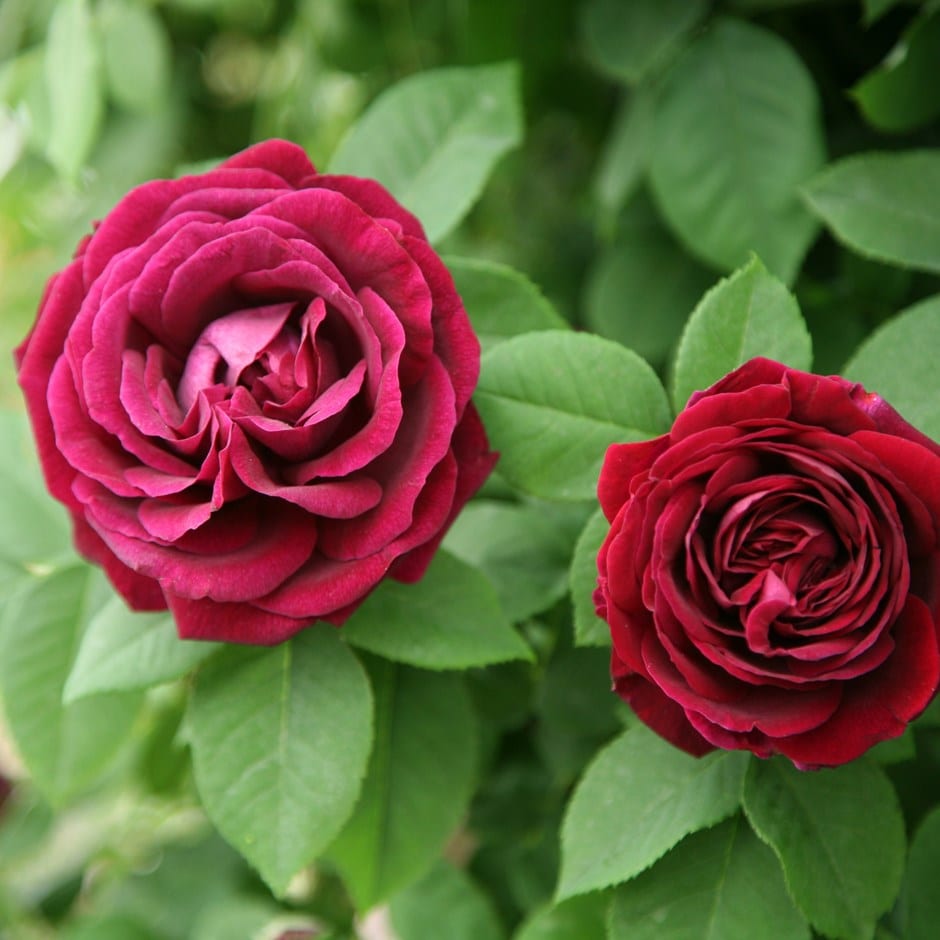
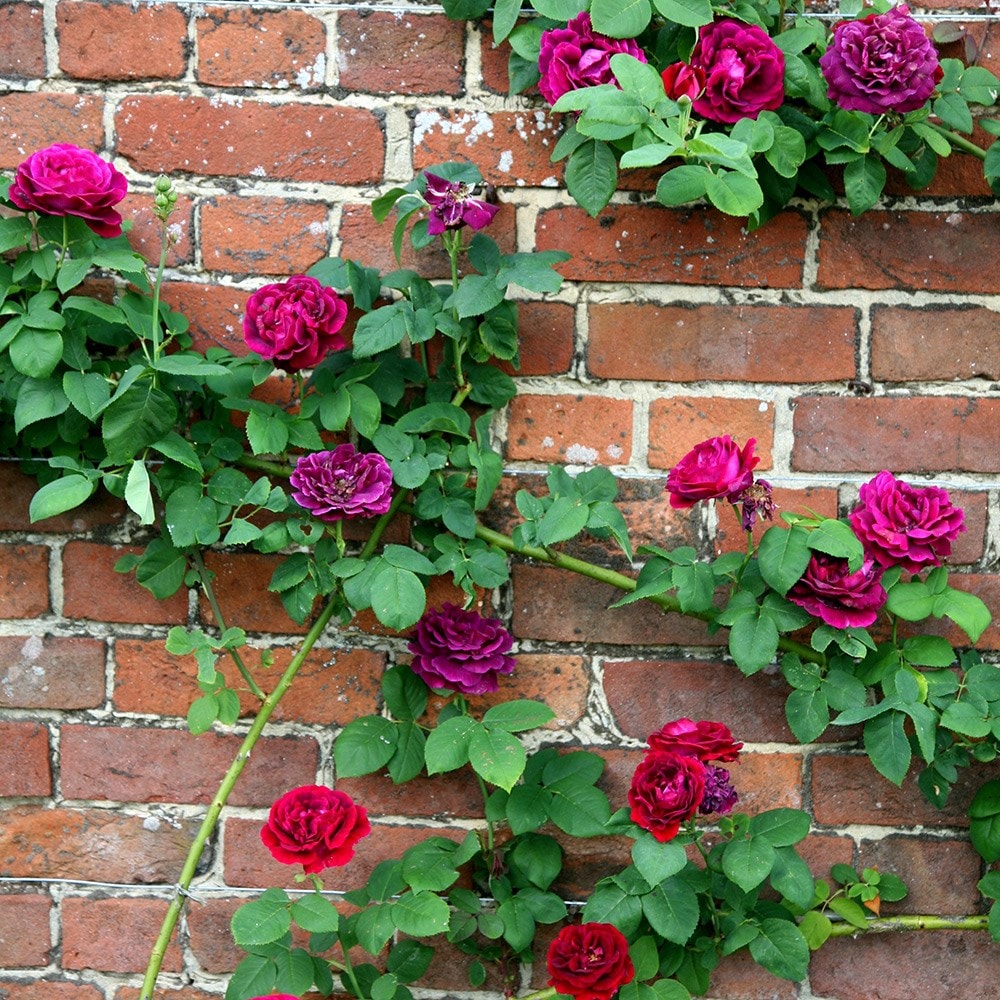

Rosa 'Souvenir du Docteur Jamain'
rose Souvenir du Docteur Jamain (climbing)
First introduced in 1865, this rose was a firm favourite of the renowned plantswoman Vita Sackville-West, and all the top designers are...
Plant description
All our roses are grown in an open field and then dug up when the weather conditions are right in October or November. Some suppliers send out their roses as 'bare root' plants (ie without pots or compost), but we pot ours up as it helps to keep the roots hydrated and in good condition. As they are dormant throughout the winter, they will not produce any new roots until spring, so don't be surprised if the compost falls away from the roots when you take them out of their pots. The roses can be kept in their pots throughout the winter provided they are kept well fed and watered, however ideally they should be planted out as soon as possible. They will already have been cut back so no further pruning will be required, apart from snipping off any tips that have died back. Routine pruning can begin in late winter the year after planting.
Eventual height & spread
Flowering period
- Jan
- Feb
- Mar
- Apr
- May
- Jun
- Jul
- Aug
- Sep
- Oct
- Nov
- Dec
Plant features
Position
Full sun
Rate of growth
Average
Soil
Moderately fertile, moist, well-drained soil
Hardiness
Fully hardy
How to care for Rosa Souvenir du Docteur Jamain:
Remove the plants from their pots and gently spread out the roots before placing them in the centre of the hole. Try to ensure that the 'bud union' (the point where the cultivated rose has been grafted onto the rootstock, and from where the shoots emerge) is at soil level. You can judge this quite easily by laying something flat, like a spade handle or bamboo cane, across the top of the hole. When they are at the right height, back-fill the hole, firming the soil down gently before watering the plant well. Tie the stems to the support in an open fan shape and as new shoots emerge, tie these in horizontally, as this will encourage flowering shoots to form nearer the base.
When planting against a large tree, dig a hole about a metre away from the trunk and angle the rose towards the trunk. The tree must be mature and strong enough to take the weight of the rose. Or you can train the rose up to the crown of branches, using wooden supports. In this case the rose should be planted on the outer reaches of the tree's canopy. Allow it to scramble up the supports and then into your chosen tree.
Water generously until well established, and apply a specialist rose fertiliser (following the manufacturer’s instructions) each spring. They will also benefit from a generous mulch of composted farmyard manure in spring, but make sure this is kept away from the stems.
From late autumn to late winter, pop on a pair of tough gloves and remove any dead, damaged or weak-looking stems. Tie in new stems and shorten the side shoots of any flowered stems by up to two thirds. When the plants become congested, remove one or two of the oldest stems, cutting them right back to their base. Climbing roses usually respond well to hard pruning, so those that have become very overgrown can be renovated from late autumn to late winter. First remove any dead, damaged or weak-looking stems completely. Keeping from four to six young stems, cut all the others right back to their base. Shorten the side shoots on the remaining stems by up to a half and tie these onto the support.
Please note:
Warning
GOES WELL WITH

Large Flowered Clematis

It is difficult not to get excited about this fabulous group of plants. Their big, bold, brightly coloured flowers, coupled with their versatile growth habits, make this one of the most popular plant groups of all time. There is no secret to their success
Read full articleHow to get more flowers
Many flowering plants can be encouraged to produce better and longer-lasting displays with the minimum of effort. A plant produces flowers in order to reproduce and ensure the survival of the species. Once a plant has flowered and fertilisation has taken
Read full articleHow to create a wildlife-friendly garden
Wildlife-friendly gardens are not only more interesting as you can watch all the comings and goings, but they are often more productive as many creatures will help increase pollination. Garden ponds act as a magnet to dragonflies and damsel flies, along w
Read full articleCottage garden
The traditional cottage garden was an intensive, yet carefree mixture of fruit, vegetables, herbs and flowers all crowded into a tiny space. Today, this informal charm can be recreated using modern varieties that largely take care of themselves around an
Read full articlePruning roses
Early spring is a good time to start pruning roses The exact time will depend on where in the country you are and how cold it is. Pruning time is between mid-March through to early April, watch for when the buds start to swell, but before any leaves appe
Read full articleRoses for the cutting garden
At some stage in June, your garden will be a glorious affair full of scent and soft flower. Placing a posy from the garden, close to a family hub like the kitchen table, unites your home and garden as effectively as having a huge picture window. You don’t
Read full articlePlanting roses
The rose has been the nation’s favourite flower for centuries, prized for their fragrant blooms that make June the dreamiest month of the year. However late-autumn and winter, when these sleeping beauties are having their long rest, is the best time to p
Read full articleOnce and only or repeat-flowering?
Modern roses are generally bred to be repeat-flowering with a main flush in June, followed by further flowers throughout the season. These roses ration their flowers with five to six weeks between flushes, finishing with a late flourish in October, or e
Read full articleClimbing and 'pillar' roses
Many climbing roses have over-large flowers on leggy stems, due to their old-fashioned Hybrid Tea blood. Their pliable stems are ideal for winding around a pillar before the new growth hardens, usually in October and November. This slows the sap and helps
Read full articlePlanting roses during late autumn and winter
Roses get away extremely well when planted in their dormant season, between November and early March. Although they will be delivered potted up (to help keep the roots moist), the compost will fall away from the roots as you remove the rose from the pot a
Read full articleGeneral pruning advice for roses
Mature roses are generally pruned in early February, after the worst of the winter is over, using good secateurs like Felco no 2's or 6's. Pruning, just like planting, must only be done in good weather. Generally floribundas are cut back to 45cm.
Read full articlePreventing rose disease
Tidy up any fallen rose leaves now, especially if they look spotty because this is almost certainly a result of a fungal disease called black spot (Diplocarpon rosae). This debilitating disease leads to poor flowering and defoliation, but not all roses ar
Read full articlePlanting companions for roses
Early flowering roses tend to come in shades of white, pink or purple-pink and most forms of the biennial foxglove, Digitalis purpurea, have toning flowers in similar colours. These appear in rose time, but carry on after the first rose flush has finished
Read full article