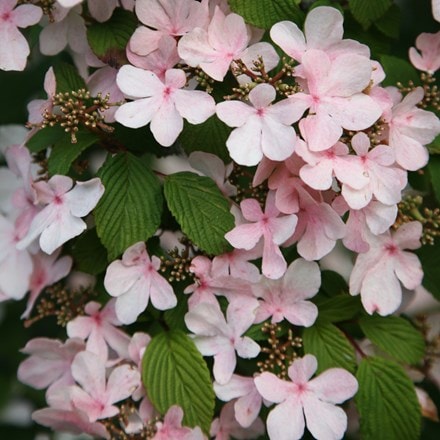
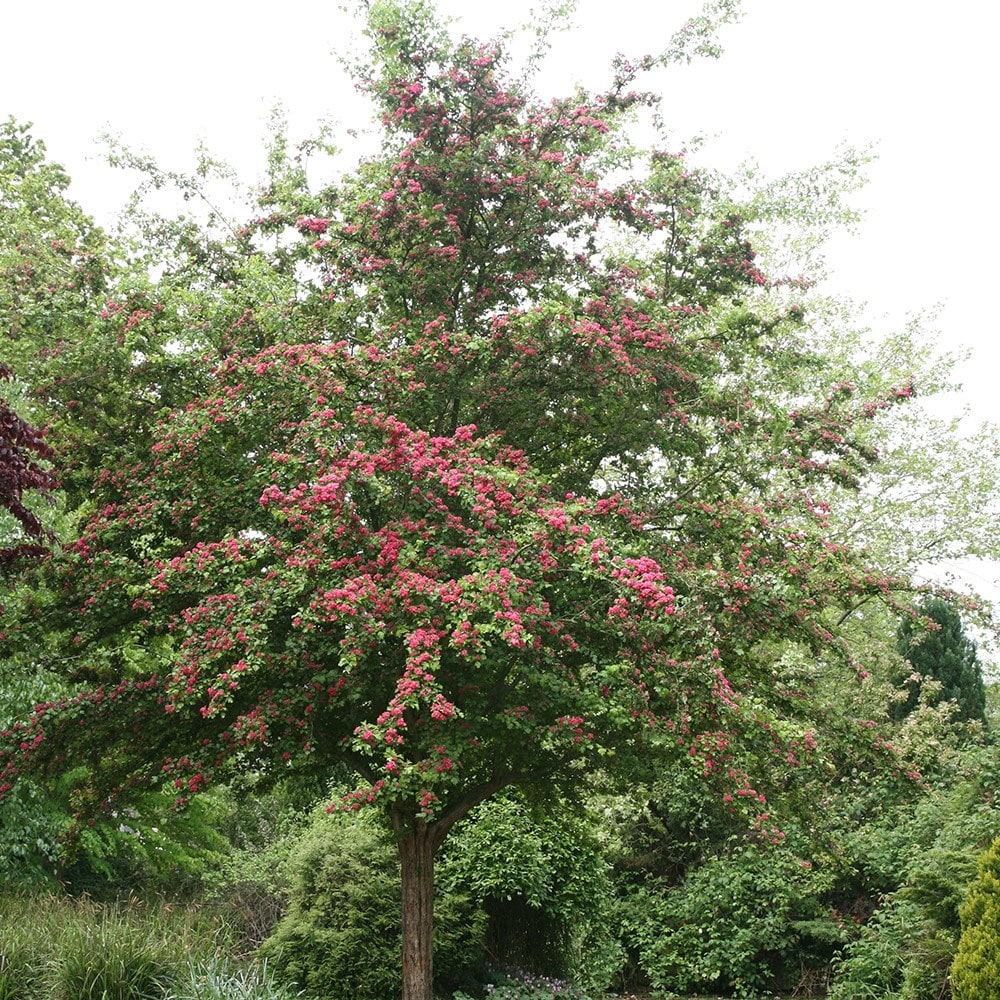
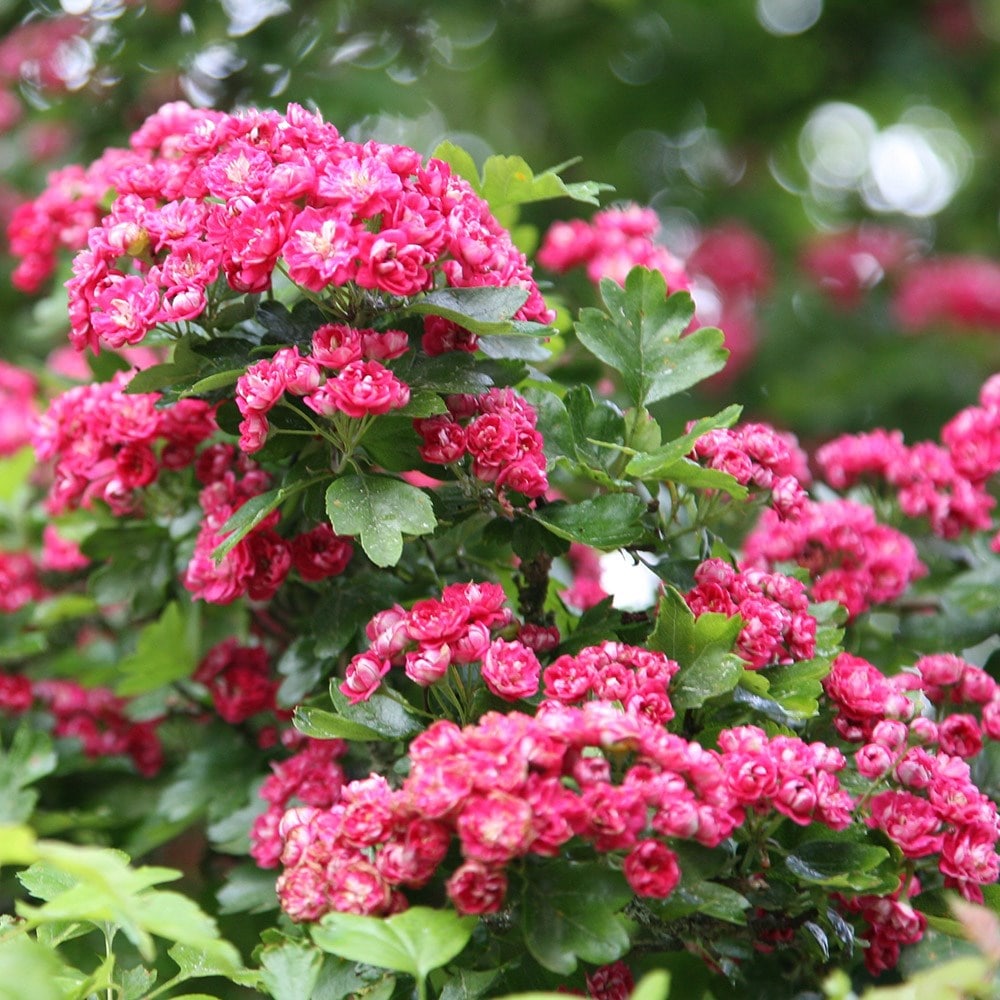
Crataegus laevigata 'Paul's Scarlet'
midland hawthorn
- Position: full sun or partial shade
- Soil: all soils except waterlogged
- Rate of growth: average
- Flowering period: March to May
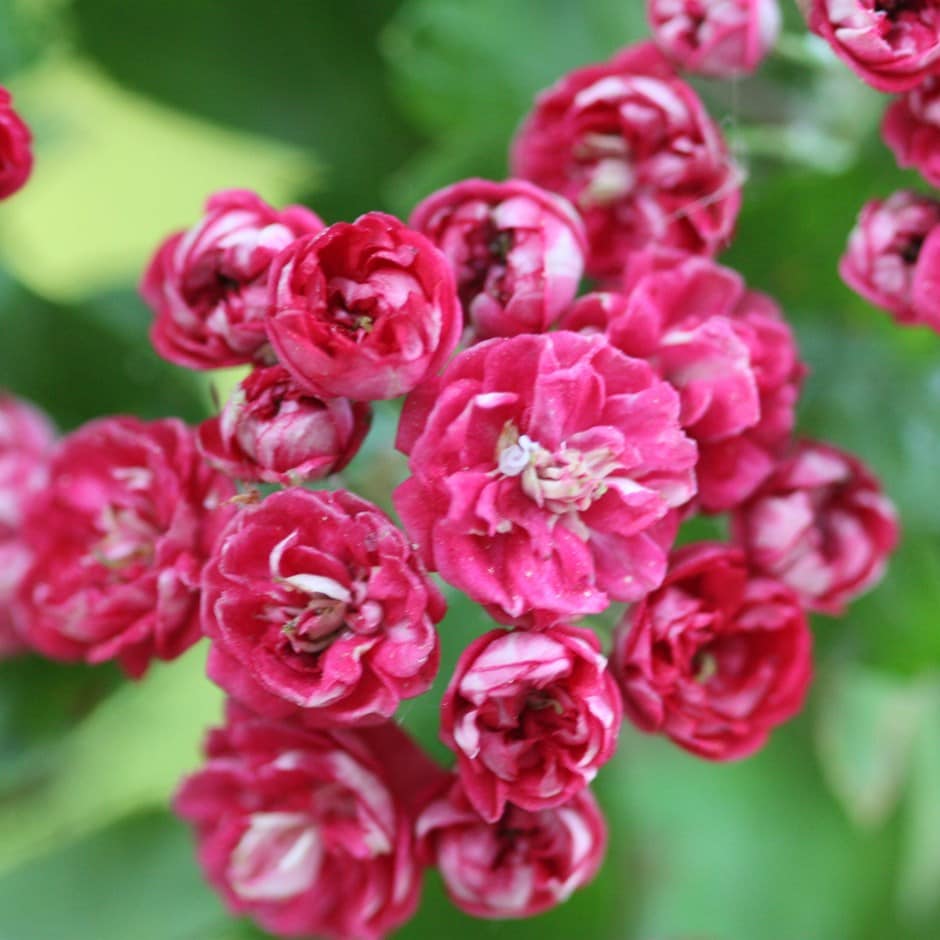
- Flower colour: pink
- Other features: a tough tree for all gardens
- Hardiness: fully hardy
A popular thorny tree with mid-green, three- to five-lobed leaves and a profusion of double, dark pink flowers in late spring. It is an ideal plant for all conditions, as it is tough enough to stand exposed sites, city pollution and even costal gardens, while also have ornamental value in the garden. - Garden care: Requires minimal pruning. Remove any broken, diseased or crossing branches in late autumn or winter. When planting incorporate lots of well-rotted garden compost in the planting hole and stake firmly.
2 litre pot
within 2-3 days excludes weekends
3 litre pot
within 2 weeks
3 litre pot
within 2-3 days excludes weekends
Do you want to ask a question about this?
If so, click on the button and fill in the box below. We will post the question on the website, together with your alias (bunnykins, digger1, plantdotty etc etc) and where you are from (Sunningdale/Glasgow etc). We'll also post the answer to your question!4 Questions | 4 Answers
Displaying questions 1-4
Q:
Please recommend a spring flowering tree or shrub
I had a new grandson born on 7th April whose name is Evan, I wondered if there was any plant shrub or tree that you could recommend either flowering in April or related to his name.Asked on 4/28/2006 by Catherine1 answer
A:
This is a lovely idea, but I'm afraid we don't have any plants that have 'Evan' in their name. We do however have some beautiful trees that flower in spring - just click on the link below each plant name to find out more about that particular one. 'Cercis canadensis Forest Pansy' http://www.crocus.co.uk/findplant/selectionresults/?ContentType=Plant_Card&ClassID=763&CategoryID= 'Crataegus laevigata Paul's Scarlet' http://www.crocus.co.uk/findplant/selectionresults/?ContentType=Plant_Card&ClassID=1050&CategoryID= 'Malus domestica Cox Orange Pippin (self-fertile)' http://www.crocus.co.uk/findplant/selectionresults/?ContentType=Plant_Card&ClassID=1853&CategoryID= 'Malus Royalty' http://www.crocus.co.uk/findplant/selectionresults/?ContentType=Plant_Card&ClassID=4595&CategoryID= 'Prunus Shirotae' http://www.crocus.co.uk/findplant/selectionresults/?ContentType=Plant_Card&ClassID=4646&CategoryID=Answered on 5/2/2006 by Crocus
Q:
Which plants are Deer proof?
I want a list of Deer proof plants please. It`s either a change in habitat or environment, but I get total devastation now and in the last two years they come up the drive.Asked on 2/3/2006 by david1 answer
A:
Deer can be a real problem and deer proof plants are usually thorny, poisonous or simply taste awful, but it is hard to give a definitive list as you might get the odd deer with unusual tastes which might like the bitter taste! Below is a list of good plants that generally are quite successful though. Cornus varieties, Rhus, Sophora, Solanum, Berberis, Rosemary, Buxus, Cotoneaster, Ilex, Pyracantha, Garrya, Juniperus, Nandina, Elaeagnus, Aralia, Aucuba, Cortaderia, Yucca, Santolina, Hypericum, Myrtle, Vinca, Achillea, Digitalis, Echinacea and Dryopteris. Finally, fencing is one method to protect garden crops from deer. Since deer jump, you need an 8-foot fence for best results or stout chicken-wire fencing securely around smaller garden plots. Alternatively, fence the area with a thorny shrub, preferably something that will grow to at least 6 feet. Deer eat roses and some thorns but hawthorn, boxwood and holly will exclude them. Deer are also deterred by dogs, hanging aluminum foil, mirrors, wood that hits objects in the wind and other noise-makers. Some old-fashioned repellents are human hair and blood and bonemeal. Hanging bars of fragrant deodorant soap from branches may work. Other well-known deer repellents are mothballs or moth flakes spread on the ground or put in mesh bags for hanging in a tree. Unfortunately though, no repellent is 100 percent effective, especially if the deer population is high and deer are starving.Answered on 2/6/2006 by Crocus
Q:
Help with creating a windbreak
I live in Scotland and during the last weekend an old lilac bush blew down. The garden is small and north facing and is very exposed. I am at a loss as to what to plant as very little survives in the wind.Asked on 5/13/2005 by S A Morgan-Jones1 answer
A:
Exposed gardens like yours do present a problem so the best thing to do is to plant a windbreak which will act as a shelter for other plants within the garden. This will then widen the choice of plants that you can use. Here's a list of large windbreak plants that can be used as the first line of defence. Hawthorn http://www.crocus.co.uk/findplant/results/?CommonName=crataegus Sycamore http://www.crocus.co.uk/findplant/results/?CommonName=acer+pseudoplatanus In front of these, it is a good idea to plant tough evergreen shrubs to further cut down the wind and provide and attractive background for the 'real' plants - here are some of the best. Prunus laurocerasus Rotundifolia http://www.crocus.co.uk/plants/_/shrubs/hedging/prunus-laurocerasus-rotundifolia/classid.4306/ Prunus lusitanica http://www.crocus.co.uk/plants/_/shrubs/hedging/prunus-lusitanica-/classid.4309/ Mahonia http://www.crocus.co.uk/findplant/results/?CommonName=mahonia Once these have established and cut down the wind, you can plant almost any type of plant you want.Answered on 5/16/2005 by Crocus
Q:
What can I plant that the deers won't eat?
What types of plants do deer not like? If you could help me out I could greatly appreciate it.Asked on 3/18/2005 by Kelly L. Sliker1 answer
A:
Deer can be a real problem and deer proof plants are usually thorny, poisonous or simply taste awful. It is hard to give a definitive list as you might get the odd deer with unusual taste which might like a bitter taste, but the following is a list of plants that generally are quite successful. Cornus varieties, Rhus, Sophora, Solanum, Berberis, Rosemary, Buxus, Cotoneaster, Ilex, Pyracantha, Garrya, Juniperus, Nandina, Eleagnus, Aralia, Aucuba, Cortaderia, Yucca, Santolina, Hypericum, Myrtle, Vinca, Achillea, Digitalis, Echinacea and Dryopteris. Finally fencing is one method to protect garden crops from deer. Since deer jump, you need an 8-foot fence for best results or stout chicken-wire fencing securely around smaller garden plots. Alternatively, fence the area with a thorny shrub, preferably something that will grow to at least 6 feet. Deer do eat roses and some other thorns but hawthorn, boxwood and holly tend to keep them out. Deer are also deterred by dogs, hanging aluminum foil, mirrors, wood that hits objects in the wind and other noise-makers. Some old-fashioned repellents are human hair and blood and bonemeal. Hanging bars of fragrant deodorant soap from branches may work. Other well-known deer repellents are mothballs or moth flakes spread on the ground or put in mesh bags for hanging in a tree. Unfortunately though, no repellent is 100 percent effective, especially if the deer population is high and deer are starving.Answered on 3/21/2005 by Crocus
Displaying questions 1-4
How to create a wildlife-friendly garden

An organic garden should also be a wildlife-friendly garden. Not only is it wonderful to see nature at work, but many creatures will help you achieve better results. The ponds in my garden act as a magnet to dragonflies and...
Read full articleNovember pruning of trees and shrubs
By November the garden is well and truly dormant, so it’s a good time to prune many deciduous garden trees. As for October, prune newly planted trees to remove any damaged growth and help balance the shape of the canopy...
Read full article