


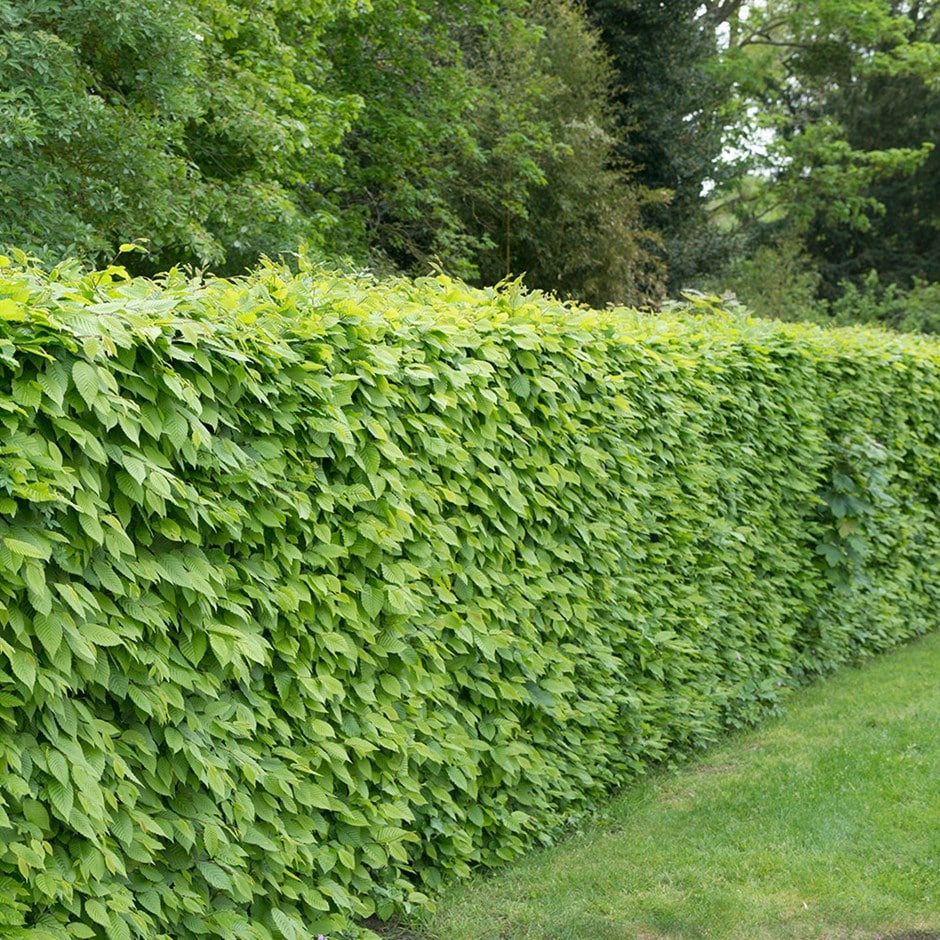
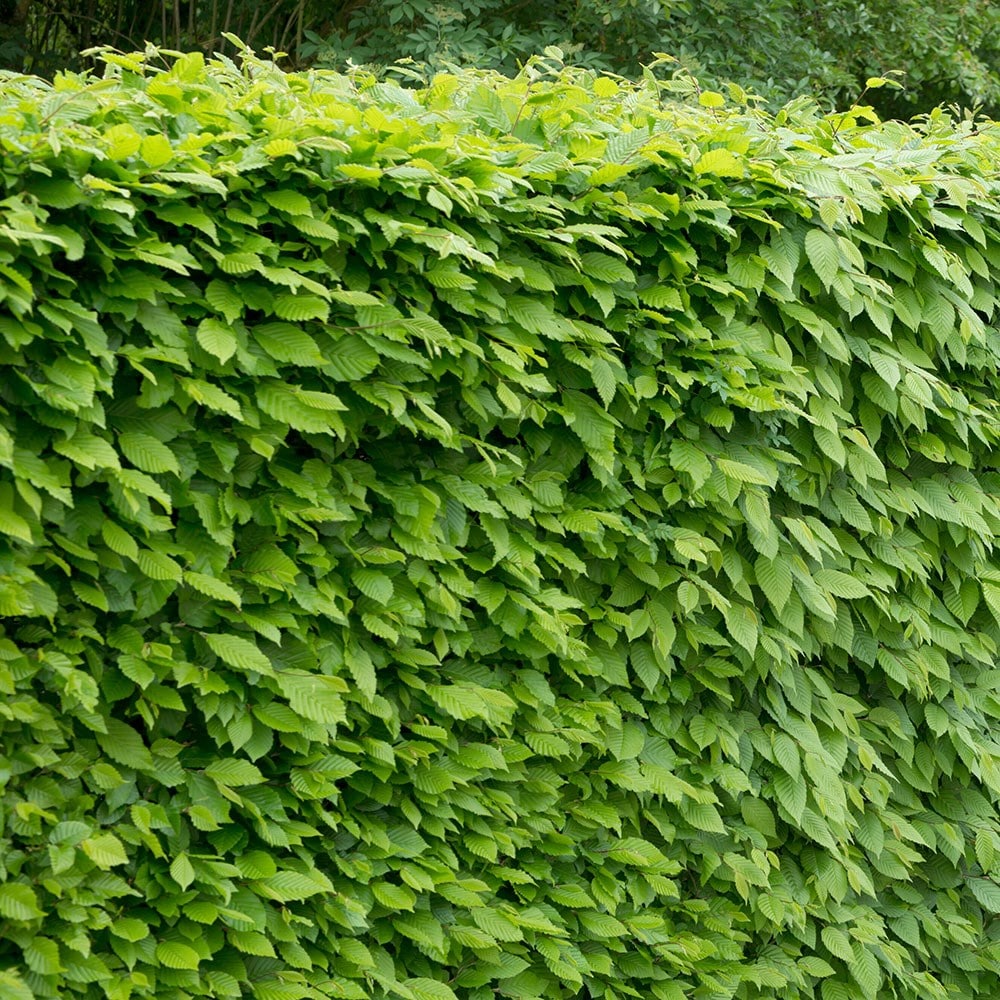
Carpinus betulus - Hornbeam hedging
common hornbeam hedging
With vivid green catkins in March, followed by clusters of green fruit, and toothed mid-green leaves turning orange and gold in...
Plant description
Our bare root plants offer a low cost way to create a hedge, but they only become available when fully dormant (typically from November to early April). These plants have a known seed provenance, and have been raised in a nursery bed for one year, then grown on in rich British soil. Bare root plants under 1m in height are 2 years old, while those over 1m, have had an extra year in the ground before being lifted, so will be 3 years old. Having developed a healthy, fibrous root system, the plants will be raring to root system, the plants will be raring to go by the time they reach you.
To find out more about how to plant a hedge, click here
Eventual height & spread
Flowering period
- Jan
- Feb
- Mar
- Apr
- May
- Jun
- Jul
- Aug
- Sep
- Oct
- Nov
- Dec
Plant features
Position
Full sun / light shade
Rate of growth
Average
Soil
Moderately fertile, moist, well-drained soil
Hardiness
Fully hardy
How to care for Carpinus betulus:
Please note:
How to create a wildlife-friendly garden
Wildlife-friendly gardens are not only more interesting as you can watch all the comings and goings, but they are often more productive as many creatures will help increase pollination. Garden ponds act as a magnet to dragonflies and damsel flies, along w
Read full articleSeptember pruning of trees, shrubs and climbers
As summer turns to autumn, thoughts turn to tidying the garden after the exuberance of summer and it is now an ideal time to prune many late-summer-flowering shrubs to keep them vigorous and flowering well. It’s also not too late to complete the pruning j
Read full articleOctober pruning of trees, shrubs and climbers
October sees the start of the dormant season which is the best time to prune lots of deciduous garden trees. You can prune newly planted trees to remove any damaged growth and help balance the shape of the canopy as well as maintain a dominant main leader
Read full articlePlanting a hedge
Hedges by their very nature are often planted in exposed positions, so the secret of successful establishment is to make sure that they are well protected from prevailing winds for the first few years. Carefully planting and covering the surface of the so
Read full articleRenovate deciduous hedges
Large and overgrown deciduous hedges, such as beech, forsythia, hawthorn and hornbeam, can be cut back to size anytime from now until February (wait until April for evergreens). Cut the top back of tall hedges to about 30cm below the required height, w
Read full article