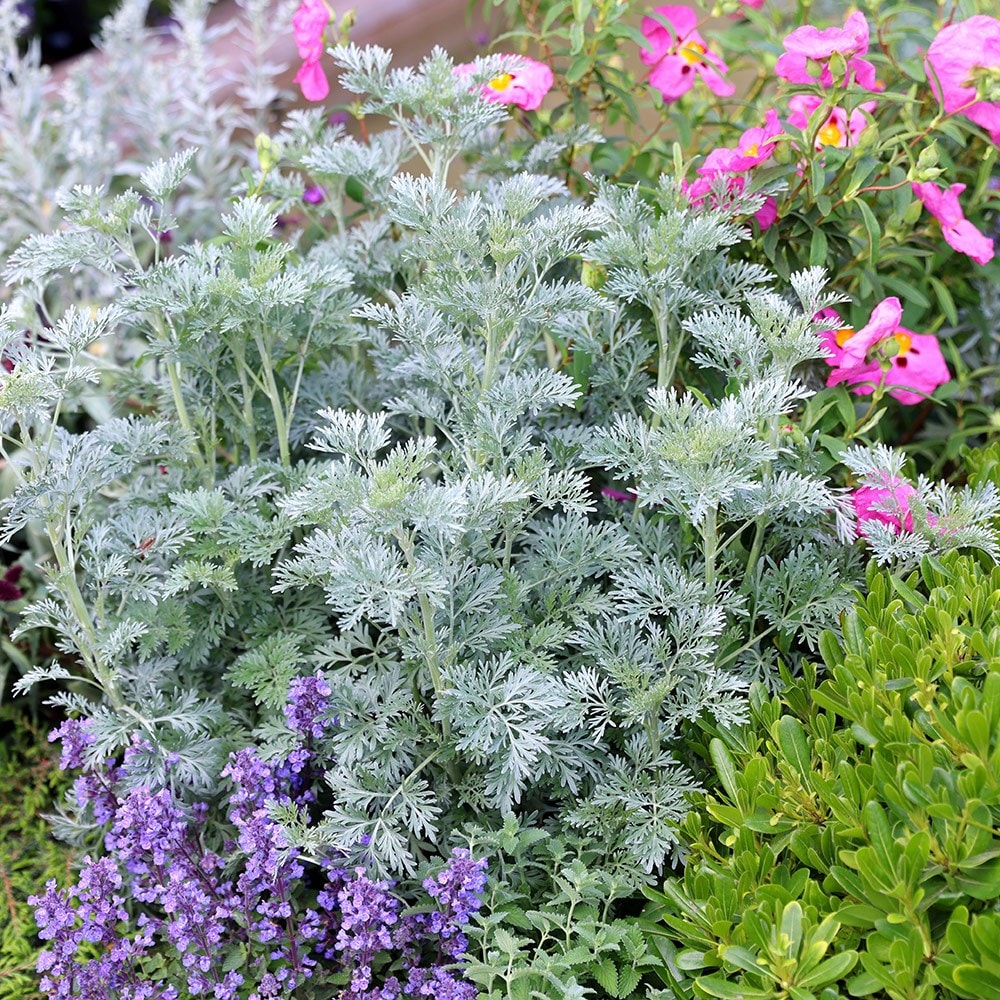
Artemisia 'Powis Castle'
wormwood
- Position: full sun
- Soil: well-drained, fertile soil
- Rate of growth: fast-growing
- Flowering period: August
- Hardiness: fully hardy
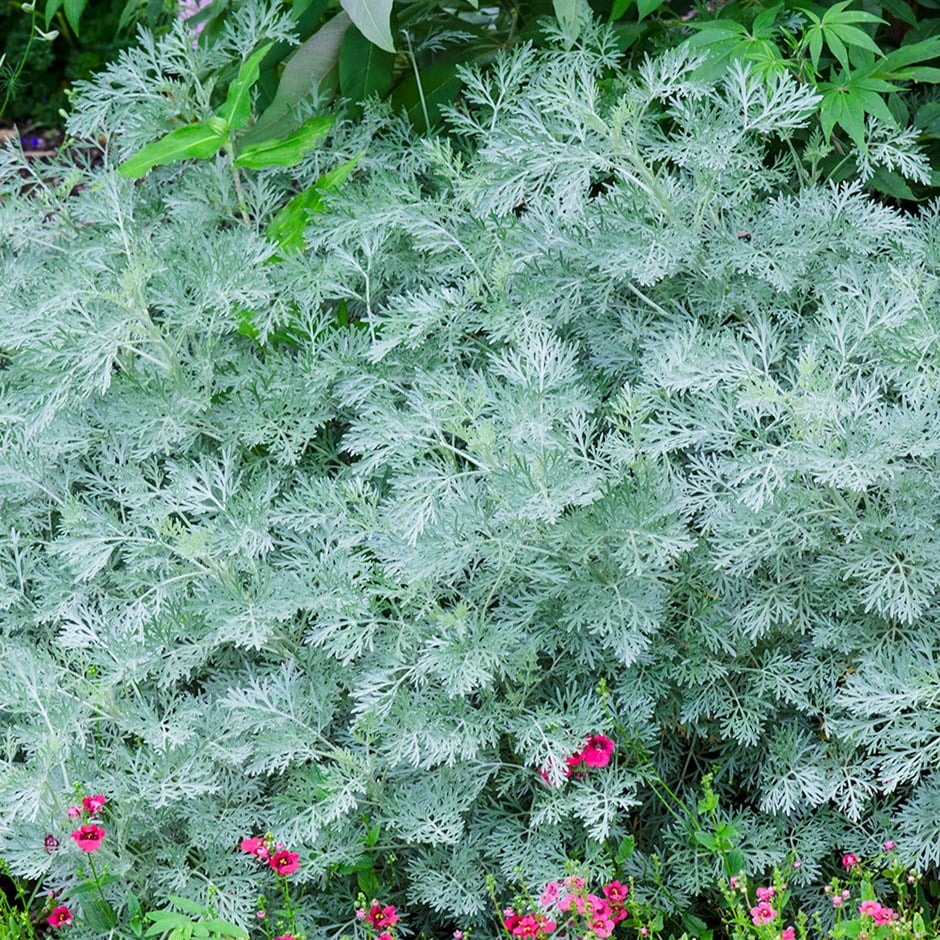
Artemisias are prized for their light, almost silver, aromatic foliage rather than for their flowers, which are dull and insignificant. This cultivar has fine, fern-like, aromatic leaves and tiny, yellow-tinged silver flowers in August. The billowing foliage of this woody stemmed perennial is ideal for a sunny rock garden or border. Although it's one of the hardiest varieties of wormwood, do plant it in a well-drained site, as the plant is likely to be short-lived in poorly drained soil. - Garden care: Cut back in early spring, but be careful not to cut into the old, woody stems that do not have buds unless it needs complete regeneration, as this may kill the plant. It helps if you can wait until the new buds are breaking before tackling it, as this will give you an indication as to where to make the cut. They fill out really quickly after pruning, but the tips may need pinching out to prevent them getting leggy.
Do you want to ask a question about this?
If so, click on the button and fill in the box below. We will post the question on the website, together with your alias (bunnykins, digger1, plantdotty etc etc) and where you are from (Sunningdale/Glasgow etc). We'll also post the answer to your question!Q:
Why has my Artemisia turned green?
I have had an Artemisia 'Powis Castle' for several years, most of these were spent in a container. When I moved and had a garden I planted it in the soil (clay-ish, neutral, I think). It has grown quite well but it is no longer as silvery. Why did that happen? Best wishes AnneAsked on 6/29/2009 by Anne Grimshaw1 answer
A:
Hello Anne, Silver-leaved plants are real sun-lovers, and their foliage may lose some of its shine if they don't get enough.Answered on 7/4/2009 by Crocus Helpdesk
Q:
How do I get rid of gnats?
We are having a wedding in our garden and need to eliminate gnats. We have a small pond, which doesn't help but we really don't want to get rid of it. There will not be room to have citronella flares. Is there anything we can plant? Thank youAsked on 6/29/2009 by Christopher Robinson1 answer
A:
Hello there, One of the nicest things to plant that will help to discourage gnats and flying menaces is lemon verbena or Lippia Citriodora. This is a wonderful plant with pretty white flowers in summer but the real attraction is its lemon scented leaves which discourage flies. It is a slightly tender plant though that needs some shelter over winter. Other plants include garlic or garlic chives, Chamomile, Artemesia, Pyrethrum and Feverfew. I hope this gives you a few ideas. Helen Plant DoctorAnswered on 7/4/2009 by Crocus Helpdesk
Q:
Advice on planting your pre-designed Red Summer border
Dear sir/madam I am particularly interested in buying the Red Summer Pre Designed Border. Please can you tell me whether these plants are suitable for planting in conjunction with weed inhibiting fabric. I want to minimise the amount of weeding required. Many thanks for your help RuthAsked on 6/22/2009 by Ruth Hamilton1 answer
A:
Hello Ruth, You can plant these into the weed supressing fabric without any trouble at all, provided you make sure the fabric allows the water to drain through. All you need to do is cut big crosses into the fabric and peel back the edges to plant and then fold back the edges again. I hope this helps.Answered on 6/23/2009 by Crocus Helpdesk
How to get more flowers

Many flowering plants can be encouraged to produce better and longer-lasting displays with the minimum of effort. A plant produces flowers in order to reproduce and ensure the survival of the species. Once a plant has flowered and fertilisation has...
Read full articleHow to use companion plants
Companion planting is a method of growing different plants adjacent to one another for the benefit of one or both of the companions. Some plants are thought to confuse or act as a decoy to potential pests, while a few...
Read full articleMediterranean
Mediterranean gardens can take on various guises from the rustic and rambling to the formal elegance of an Italian courtyard. However, they all have key features in common, including the use of exotic, sometimes tender, drought-tolerant plants in pots and...
Read full articleMarch pruning of trees, shrubs and climbers
Use the following notes as a guide when pruning trees, shrubs and climbers in your garden during the month of March. I’ve included timely advice on Abeliophyllum, Artemesia, Brachyglottis, Brunfelsia, Buddleja, Ceanothus, Clematis, Colutea, Cotinus, Daphne, Eccremocarpus, Elsholtzia, ...
Read full articleChelsea Chop and other methods of extending the flowering season
Many gardeners who are happy, even gung-ho, with the secateurs when pruning shrubs and climbers are surprisingly reluctant to take the shears to herbaceous perennials. Maybe this is because it just doesn’t seem quite right to be cutting back all...
Read full article


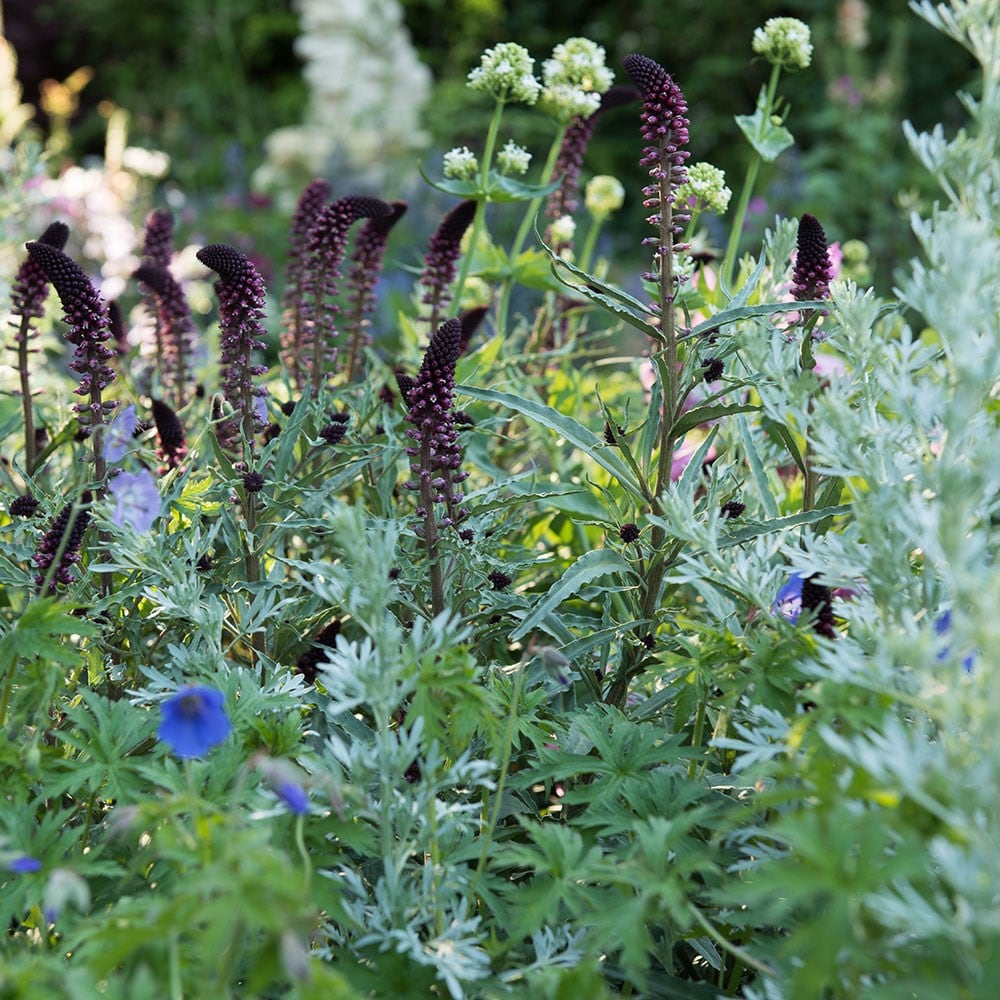
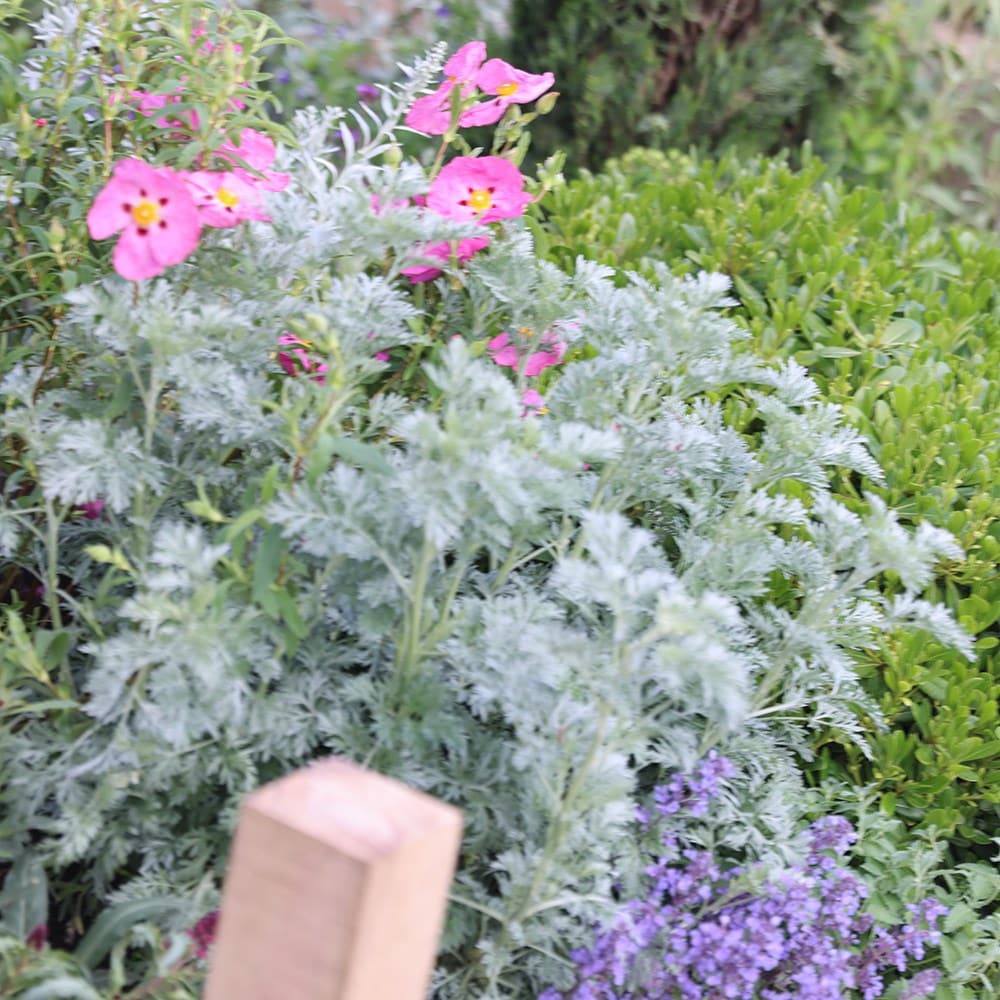
Combine this billowing mound of finely cut, grey-green foliage with sun lovers on your hottest, driest sites for summer exuberance
Val Bourne - Garden Writer