New on the nursery

You can grow a lot of plants on 30 acres, but we try not to get too carried away! We are refining our plant list all the time. Varieties that we think no longer have a place in the garden are replaced with plants we have fallen in love with, or ones that have become popular with leading designers. Here are a few new favourites:
Chrysanthemums were prized by Gertrude Jekyll for their fresh colour contribution to the autumn scene. This trouble-free selected form is easy to grow, producing twiggy, branched stems which support large sprays of open single daisies in a warm apricot pink. Capable of reviving a flagging planting later in the season, they associate well with Asters and Sedums of the same period and are a good contrast to vertical grasses. An excellent cut flower for the harvest festival!
This is a New North American variety with medium-sized fruit that have an outstanding flavour. Fruiting in late summer / autumn The fruits are extremely large, flavoursome and aromatic. The plant is vigorous in habit and has very good resistance to crown rot and moderate resistance to verticillium wilt.
Asters are invaluable for providing late summer and autumn colour in the garden. This mildew-resistant form produces a fountain of twiggy stems, topped by full sprays of simple starry daisies in pale lavender blue. Their golden cental eye is a target for bees and butterflies. Suitable for middle or front of a sunny border where it will give a colourful display for many weeks. An excellent cut flower.
A native of cool forests in India and the Himalayas, this bamboo is a recent introduction to the UK. It is prized for its colourful canes, which emerge each year in early summer in shades of greeny-blue with a hint of maroon and fade slowly as they age to a mustard yellow. It has a very upright habit so is great adding vertical interest.
A splendid tree with green leaves that turn a rich copper in autumn. As a tree it is only suited to large gardens or parks, grown as specimens in the lawn. However, it does make a superb hedge, retaining the brown leaves through winter and only loosing them when the new foliage appears in spring. It will make a lovely formal hedge that also acts as an excellent windbreak.
-
Find the right plant

-
Choosing Plants

Find the right plant for that bit of the garden that nothing grows in…
-
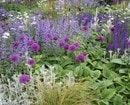
For ready-made borders, good combinations and other design ideas
-

Mediterranean, jungle, cottage, seaside, japanese, take your pick…