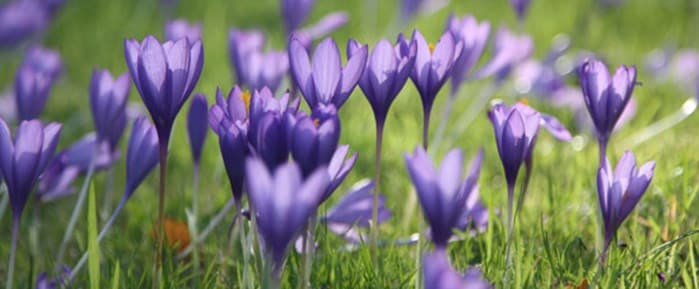
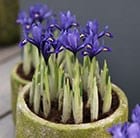
Bulbs are ideal for anyone who rates themselves as 'keen-but-clueless' because they are one of the easiest plants to grow. Provided you plant them at the right time of year at more or less the right depth, they will reward you year after year with a reliable display of blooms.
When should I plant?
The planting time for bulbs varies broadly according to their flowering time. Spring-flowering bulbs should be planted from early autumn, so they have time to produce new roots before the onset of winter. Tulips are the main exception to this rule because they can be planted in late autumn or even early winter without adversely affecting the flowering for the following season. Summer-flowering bulbs, such as dahlia and gladioli, and autumn-flowering bulbs, such as colchicums, are best planted from late spring onwards (see table, below).
Planting tips
All bulbs should be planted with the 'nose' (the pointed bit where the shoot comes out) at the top and the 'basal plate' (the flat bit where the roots are produced) at the bottom. The only exception to this rule is with crown imperials (Fritillaria imperialis) which are hollow and should be planted on their sides to prevent rotting.
To achieve a natural-looking swathe of bulbs you will need to plant them in irregular blocks at variable planting distances. If you find this difficult, try scattering the bulbs and planting them exactly where they land.
Where only a few bulbs are being planted, use a strong trowel or one of the special cylindrical bulb planters to make the hole. For larger swathes of bulbs use a spade to dig out a planting block to the correct depth, position the bulbs and then replace the excavated soil.
On heavy soils sit the bulbs on a layer of sharp grit to aid drainage and help prevent rotting.
When planting in lawns, carefully peel back the turf, then dig out the soil and plant the bulbs. Once the soil has been replaced and consolidated by treading lightly, you can replace the turf and fill any gaps with sieved garden soil.
Under trees, plant singly because large excavations will cause more damage to tree roots and may encourage suckering.
If you have had problems with rodents such as mice and squirrels digging up and eating your bulbs in the past, try covering the planting area with a layer of chicken wire buried just below the surface.