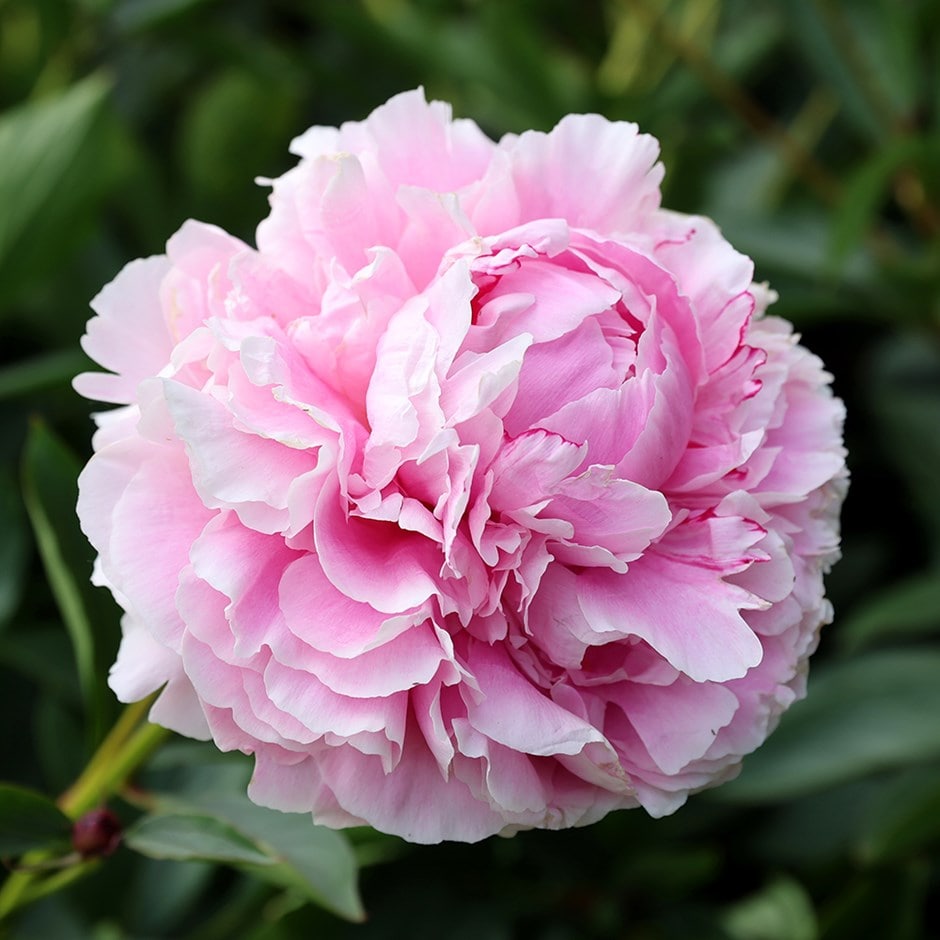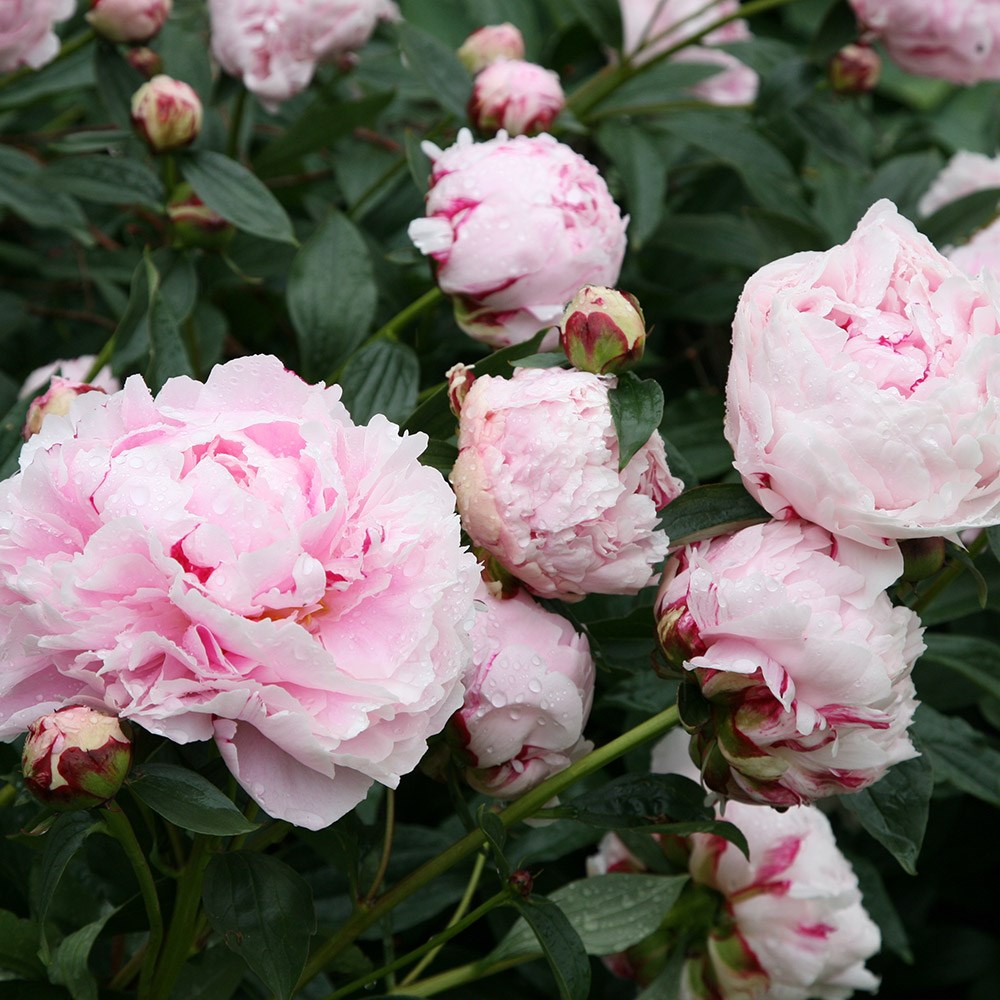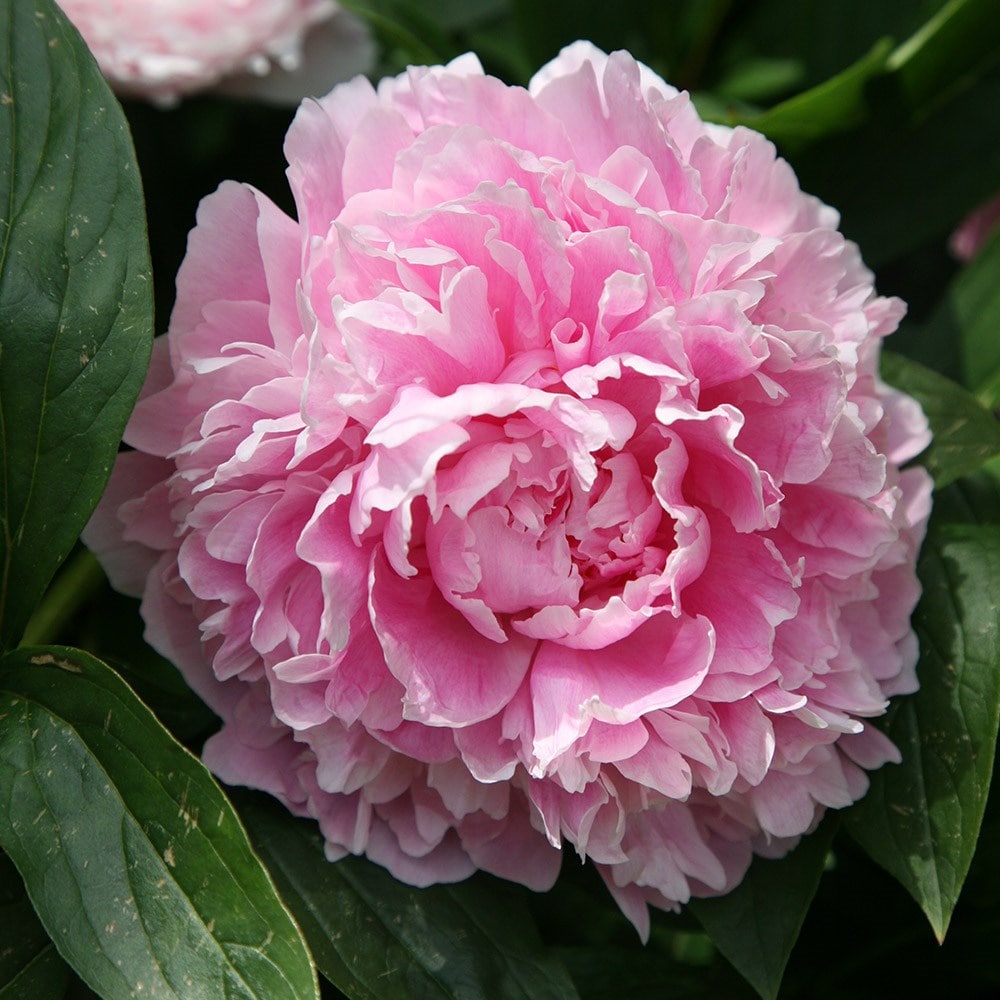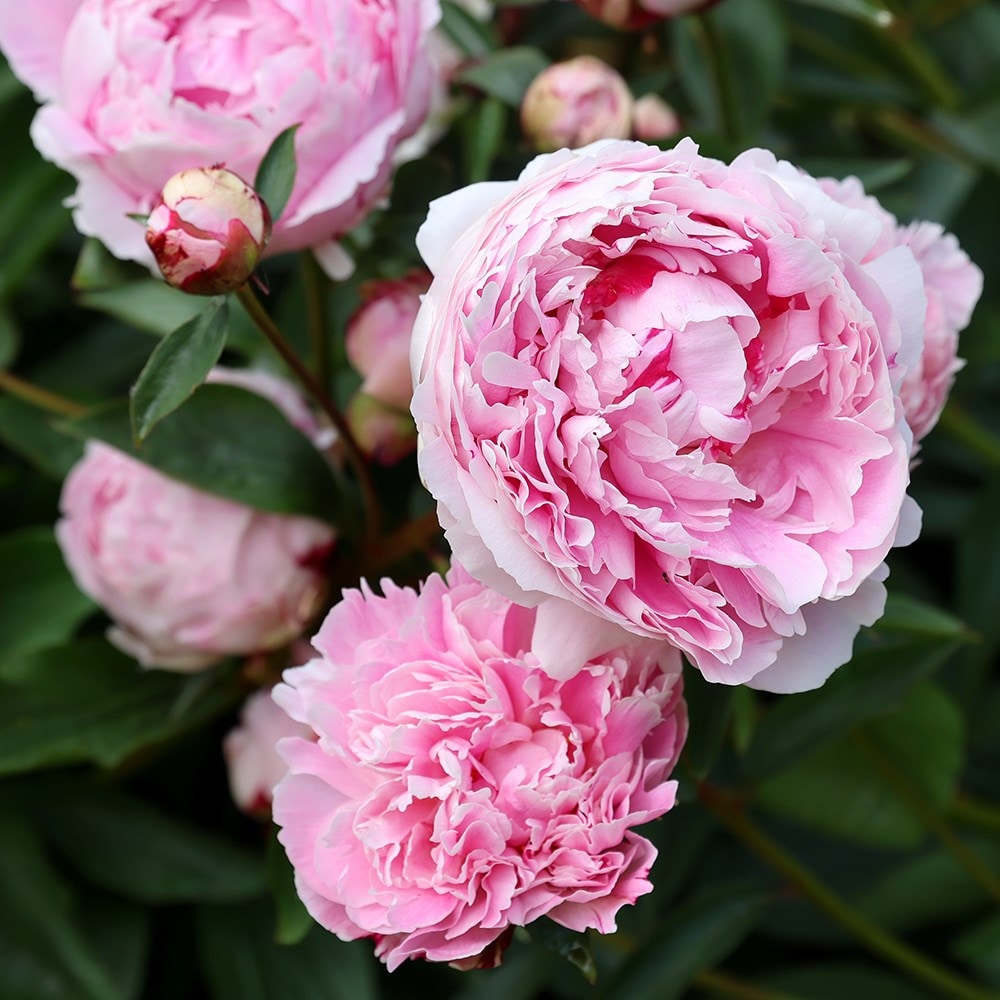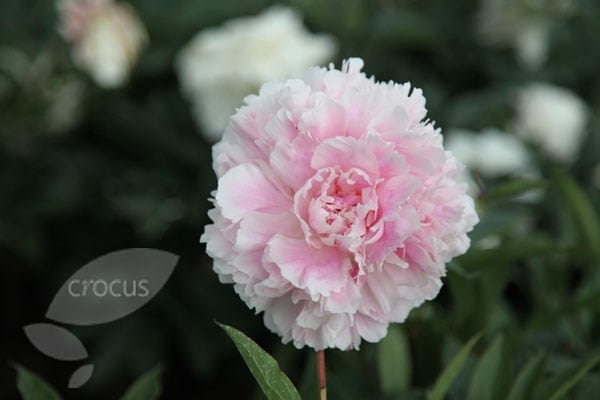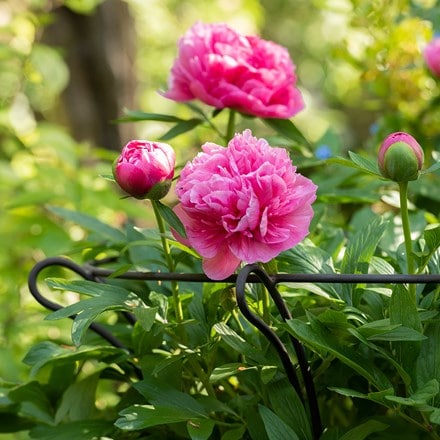
Paeonia lactiflora 'Sarah Bernhardt'
paeony / peony
- Position: full sun or partial shade
- Soil: fertile, moisture-retentive yet well-drained
- Rate of growth: average
- Flowering period: June to July
- Flower colour: pink
- Other features: ideal as cut flowers
- Hardiness: fully hardy
- Garden care: Deadhead after flowering. In early spring apply a balanced slow-release fertiliser around the base of the plant and mulch with well-rotted compost or manure. Fungal diseases may occur in cool, wet springs so prune out any affected parts and spray the remaining sections with fungicide.
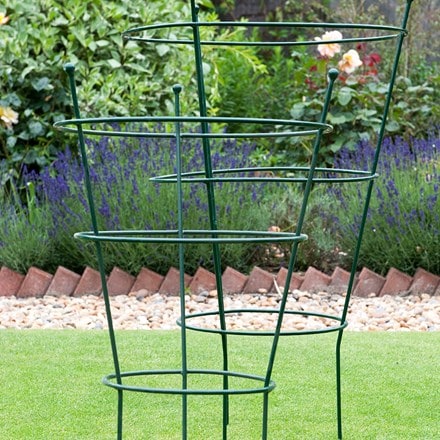
Enormous, rose pink, fragrant, double summer flowers and mid green leaves. This magnificent, late-flowering, pale pink peony has been popular since the Edwardian era. To support the large flowers stake in spring using bamboo canes or metal link stakes. An excellent specimen plant for a partially sunny border.
2 litre pot
within 2-3 days excludes weekends
2 litre pot
within 2-3 days excludes weekends
9cm pot
within 2-3 days excludes weekends
2 litre pot
within 2-3 days excludes weekends
2 litre pot
available to order from late summer 2013
2 litre pot
available to order from late summer 2013
Do you want to ask a question about this?
If so, click on the button and fill in the box below. We will post the question on the website, together with your alias (bunnykins, digger1, plantdotty etc etc) and where you are from (Sunningdale/Glasgow etc). We'll also post the answer to your question!7 Questions | 8 Answers
Displaying questions 1-7
Q:
Growing plants for a wedding
Dear Crocus, I am a very happy customer ..... I love your site, plants and service. I learnt about you first from Arabella Lennox-Boyd. But now I am writing for some advice please. My sister is getting married in Oxfordshire on the last weekend of May. I would love to grow the flowers for the wedding. I have a big garden with empty beds and a green house at my disposal. Could you give me some advice on types of cut flowers that would be in bloom at the end of May? Some pointers as a place to start my research and buying would be fantastic. Thank you very much, Best wishes, KateAsked on 1/8/2010 by Kate Olivia Higginbottom2 answers
A:
Thank you so much Helen - amazing! I'll send you photos of the finished results. Best wishes and thanks again, KateAnswered on 1/8/2010 by Crocus HelpdeskA:
Hello Kate, It will be a little hit and miss as a lot will depend on the weather, but the following plants should be in flower around that time. Choisya ternata
http://www.crocus.co.uk/plants/_/shrubs/choisya-ternata-/classid.825/
Osmanthus x burkwoodii
http://www.crocus.co.uk/plants/_/shrubs/osmanthus-%C3%97-burkwoodii-/classid.4171/
Syringa http://www.crocus.co.uk/search/_/search.syringa/
Viburnum x carlcephalum
http://www.crocus.co.uk/plants/_/shrubs/viburnum-%C3%97-carlcephalum-/classid.4460/
Convallaria majalis
http://www.crocus.co.uk/search/_/search.convallaria/ Iris
http://www.crocus.co.uk/search/_/search.iris/ Paeonia
http://www.crocus.co.uk/search/_/search.paeonia/ Euphorbia palustris
http://www.crocus.co.uk/plants/_/perennials/euphorbia-palustris-/classid.2794/
Aquilegia http://www.crocus.co.uk/search/_/search.aquilegia/
Ceanothus Skylark
http://www.crocus.co.uk/plants/_/shrubs/ceanothus-thyrsiflorus-skylark/classid.728/
and if we have a hot start to the summer a couple of roses or some of the earlier lavenders may have started too. I hope this gives you lots of ideas. Helen Plant DoctorAnswered on 1/8/2010 by Kate Olivia Higginbottom
Q:
Planting Peonies
Hi, I received my RHS garden magazine a few days ago and I am interested in the Peonies. I just have a question regarding Peonies - if I buy them now when is the best time to plant them? Regards GiovannaAsked on 10/22/2009 by Giovanna1 answer
A:
Hello Giovanna, Ideally these should be planted as soon as you receive them into fertile, moisture-retentive yet well-drained soil in full sun or partial shade. I hope this helps. HelenAnswered on 10/22/2009 by Crocus Helpdesk
Q:
Paeonias starting to look bit unwell- are they ok?
Hi, I ordered some Paeonias in April.....of the four that I bought I am bit worried as to me thye don't look very healthy. Would you be able to give me some advise please? Are they Ok? Thanks and with kind regardsAsked on 9/26/2009 by Maria Hagbro1 answer
A:
Hello there, These plants are starting to die back now and this is a natural part of their life cycle. The leaves will continue to deteriorate in autumn and disappear altogether in winter, then in the Spring the plants will put on lots of new, lush growth. Best regards, Helen Plant DoctorAnswered on 9/28/2009 by Crocus Helpdesk
Q:
Peonia advice
Hello I just wanted a quick bit of advice before I make a purchase. I'm hoping to plant some peonies in a raised bed on an allotment this September. I was thinking of purchasing the following: Paeonia Buckeye Belle, Paeonia lactiflora Sarah Bernhardt, Paeonia lactiflora Bowl of Beauty I just wanted to check how big a bed I should have, how deep the bed should be and how far should I space each specimen. Many thanks, SimonAsked on 8/16/2009 by Simon Swift1 answer
A:
Hello Simon, There are no hard and fast rules. You can see the eventual width of these plants on our site, which is between 80 - 90cm, so if you want to space them with small gaps in between you should aim to plant 1 per m2. If you don't mind them touching and intermingling, you can plant them closer. As for the depth, they do not really need to be grown in raised beds as long as the soil is good and does not remain waterlogged for any length of time. If the raised bed in going over soil, then the plants roots will work their way down into this anyway. I hope this helps. Helen Plant DoctorAnswered on 8/17/2009 by Crocus Helpdesk
Q:
Help with leaf problem on my Paeonia please
Hi, I bought a Paeonia lactiflora 'Adolphe Rousseau' and have potted it into a large container with (washed) gray slate covering the soil. For some reason the leaves are being eaten away at an alarming rate, with scarred, brown lines throughout. I have looked at the 'blight' disease but they look eaten rather than blotchy. Any Ideas, help please!? Yours, WillAsked on 7/23/2009 by W Bone1 answer
A:
Hello Will, I'm afraid I have not been able to determine what has been 'at' your Paeonia from your description, but if you think it is being eaten, then I would spray it with a good, systemic insecticide such as Provado, which will kill off most predators. http://www.crocus.co.uk/product/_/tools/chemicals/pesticide/provado-ultimate-bug-killer-ready-to-use/classid.2000006039/ I'm sorry not to be more help. Helen Plant DoctorAnswered on 7/24/2009 by Crocus Helpdesk
Q:
Can I divide my Peonies?
Could you please tell me what to do with my Peonies, now that they've finished flowering. I would like to move and divide them if possible, as they have outgrown the space where they were first planted. Thank you ValAsked on 6/14/2009 by david gregory1 answer
A:
Hello Val, Herbaceous Peonies, should be left until they have died back and then lift and divide them in the autumn or early spring. I hope this helps.Helen Plant DoctorAnswered on 6/15/2009 by Crocus Helpdesk
Q:
How do I look after my Paeonies?
I have two newly established Paeonies (2nd year - still no flowers) and the leaves have now turned brown. Am I meant to prune them? Is there any other advice regarding their general care?Asked on 11/8/2005 by Bets Ingram1 answer
A:
Paeonies can take a few years to establish and produce flowers, so I would not be too despondent. As for general care instructions, it all depends on what type of paeony you have - a tree paeony or a herbaceous type. If your paeonies still have a woody stem at this time of year then they are more than likely tree paeonies. The herbaceous paeonies die right down, so any foliage now would have collapsed due to the frosts The later need very little care. Do not prune the plants at all, but remove the dead foliage in autumn to tidy them up. In early spring apply a balanced slow-release fertiliser around the base of the plant and mulch with well-rotted compost or manure. If you have a tree paeony, you will need to treat it a little differently, but you will still need to remove the dead leaves, making sure the remaining stem remains intact. Depending on the size of the plant you have bought, they can take up to to four years to start flowering after planting. Sometimes a newly planted tree peony will appear to make very little growth in its first season, but all its activity happens underground as its energies are going into producing a good root system. Providing the foliage looks reasonably healthy, there is nothing to worry about and this may just be a 'settling in' period. Occasionally the main stem may die back a little. This might be a little worrying, but wait until the following spring when vigorous growth should resume from the lower part of the stem or even from below soil level. Tree peonies are heavy feeders and they respond well to a generous, early autumn top dressing of blood, fish and bone, a slow release organic fertiliser. Its high potash content encourages flowers to develop. A light sprinkling of a general fertiliser such as Growmore can be applied in the spring if you wish. They also respond well to pruning. Ultimately you should aim for a broad, multi-stemmed shrub of up to 120-150cm in height, which will not need staking. Chinese and American types have a naturally branching habit and will need less regular pruning than the Japanese and French types. While the plant is still young, don't be tempted to prune, apart from removing dead wood during the first two years to help get the plant established. After this if your plant forms a good shape, no regular pruning is needed. However, if your plant has few stems and is poorly shaped, then prune hard in late winter or early spring, just as the growth buds are swelling. This may mean that you sacrifice some flowers in the coming year. If this is a big issue, you can also prune it directly after flowering but the regrowth will be slower.Answered on 11/9/2005 by Crocus
Displaying questions 1-7
Cottage garden
The traditional cottage garden was an intensive, yet carefree mixture of fruit, vegetables, herbs and flowers all crowded into a tiny space. Today, this informal charm can be recreated using modern varieties that largely take care of themselves around an...
Read full articleTown
Create an ‘outside room’ that overcomes the three challenges of shade, exposure and lack of space using uplifting, shade-tolerant shrubs, perennials and bulbs. A sense of seclusion can be achieved with decorative screens and trellis covered in deciduous, fragrant...
Read full article


Lots of ruffled, silver-pink double flowers make this a florist’s choice - her sheer flower-power makes gardeners forgive her habit of swooning
Val Bourne - Garden Writer